Your Weekend in Syunik, or New Adventures in the Syunik Region. Part I
Traveling in Armenia brings countless new impressions and emotions: a change of scenery, new faces, and unforgettable experiences. Have you ever thought about enriching your travels with a variety of unique experiences?
My destination is Syunik. This time, not only a new environment awaits, but also traditions and characteristics unique to this region. How can you have a well-organized weekend? Based on my own experience, I will show you what a truly fulfilling weekend looks like. I assure you, you have never had a journey like this.

ԲԱՑԱՀԱՅՏԻ՛Ր
ՕՐ ԱՌԱՋԻՆ
At the museum, which presents the history, culture, and everyday life of Syunik, you can see exhibits excavated from nearby archaeological sites. This time, however, I will not tell you about the objects displayed in the museum, but about the “trees” that carry stories.
Unfortunately, in many families, the idea of keeping a family tree has long been forgotten. Here, they explain the true meaning and importance of a family tree. It turns out that among Armenians, memories of the clan, family, and ancestry have often been represented in the form of a tree. This is hardly surprising, as the tree is considered a natural symbol of reproduction and development.
My grandfather told me about our family when I was little and, like every child, absent-minded…
They asked me from which branch of the tree I knew my family’s story. I began…
Emotions, emotions. It was a flood of feelings. Only then did I truly understand the meaning of the saying: “As long as you remember your ancestors, they remain alive.”
This experience stirred the dusty box of my memories… I realized that I hardly knew my relatives. A cry for help call your parents.
The Family Tree Workshop became the best way to connect with my ancestors.
Sometimes we forget that we are heirs and successors, and that each of us is a link in the continuous chain of life from the past to the future, from our ancestors to our descendants. It is very important to preserve the memory of where a person came from and who their ancestors were.
I hurry to Basen Hotel for the Soviet City Tour.
The history of Soviet Sisian begins in the hotel’s courtyard. This is exactly where the Soviet-era Sisian airport once stood. Flights from here to Yerevan operated until the mid-1980s.
Local elders still remember amusing stories about the airport for example, how people transported chickens and all kinds of other things to Yerevan.
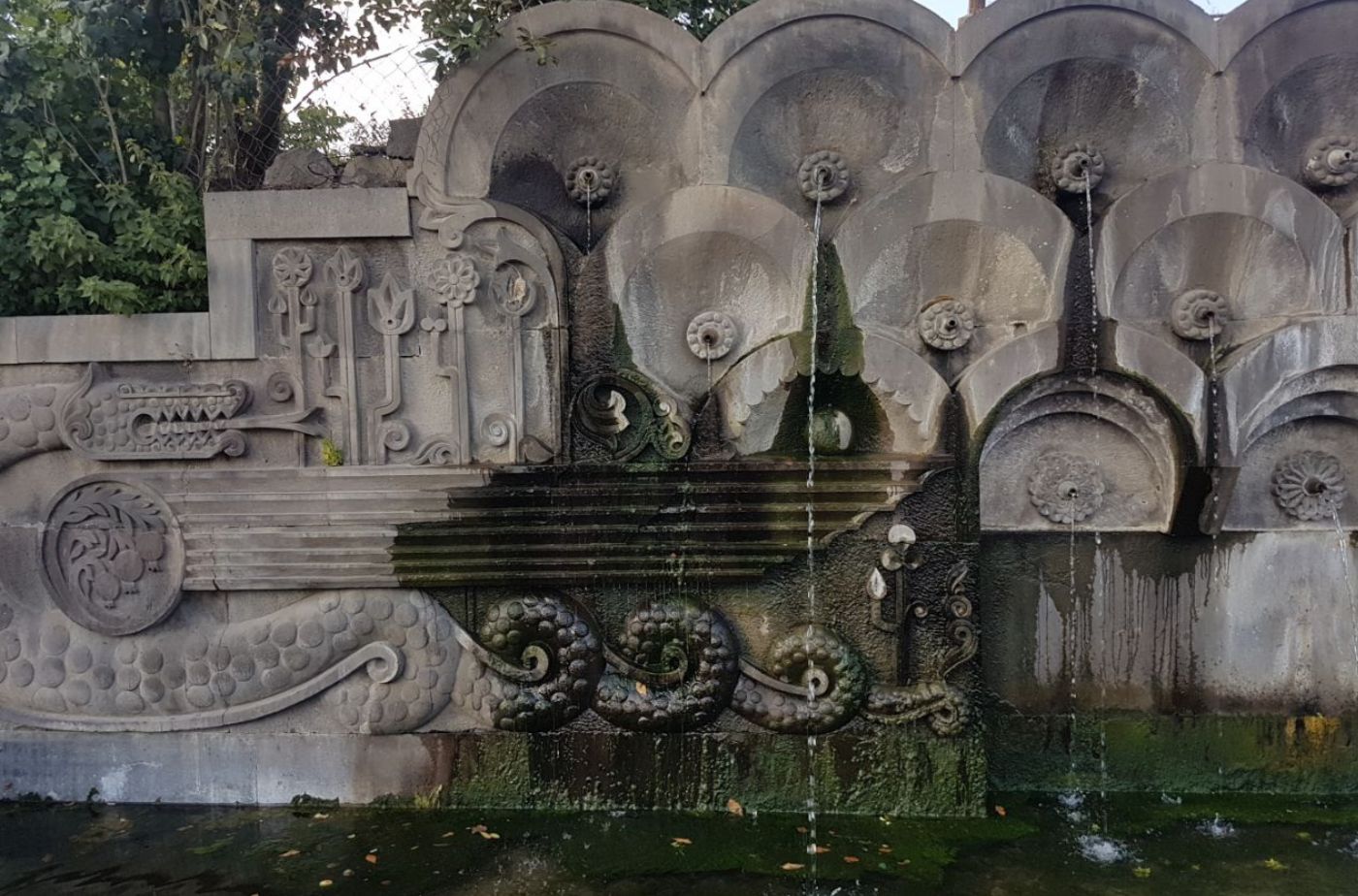
Sisian is rich in spring fountains. People in this region have a special reverence for springs. The tradition of building fountains has a very long history.
Throughout Sisian, you can find monuments dedicated to those who died in the Great Patriotic War. There is also a memorial fountain dedicated to the 40th anniversary of the victory in the Great Patriotic War, a monument dedicated to the fighters who died for the establishment of Soviet rule in Armenia, created by three sculptors, one of whom was Theresa Mirzoyan.
Ahead, you will also see the names of Sisian residents who died in the Civil War.
The district committee building, the library… Once you start paying close attention, you realize that every corner of Sisian is infused with stories from the Soviet era.
I have shared only a small part of my discoveries. For the rest, you have to visit yourself.
I will only add that Basen Hotel offers fascinating tourism experiences using Soviet-era off-road vehicles.
WHERE TO STAY
If you are familiar with my previous visits to Sisian, then you already know that I always stay at Basen Hotel. I spend the evenings with Hasmik, with whom we not only discuss the tourism opportunities of the region but also share warm and very personal conversations.
Hungry? Then head to Hatsatun.
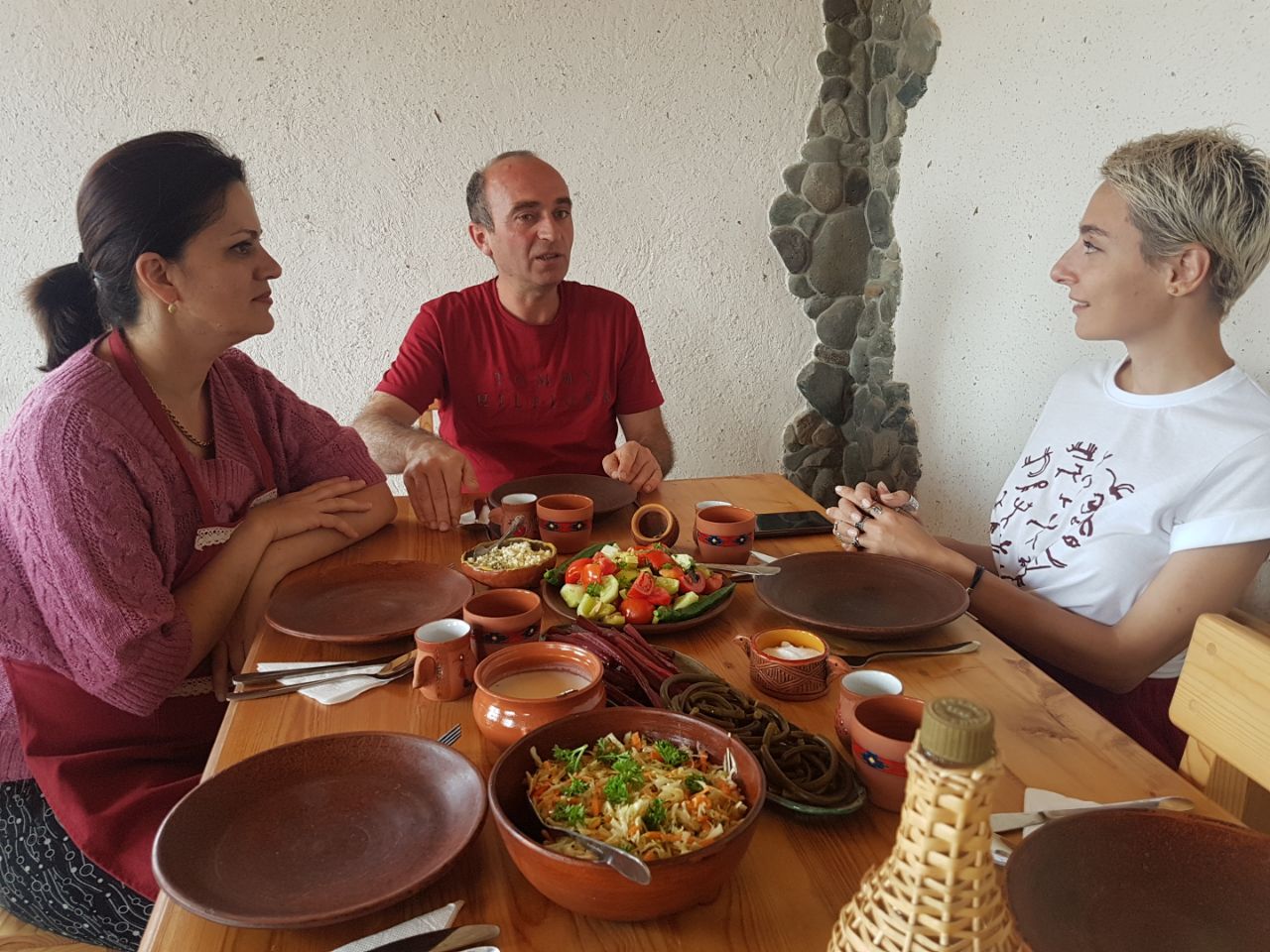
I am welcomed by Vahagn and Zara from the now familiar Sisian Ceramics.
Ancient Armenians always made wise and beautiful toasts.
Before Zara brings the traditional Sisian kyalagyosh, Vahagn explains how people traditionally sat around the table.
I learned that:
- People sat according to age.
- The woman responsible for the table sat at its corner.
- A separate table was prepared for the children.
With the very first toast, the tamada (toastmaster) was chosen. If the tamada was the head of the household, the toasts began with:
“It is good that we have gathered together. May this table be blessed and abundant.”
With that same glass, they drank to the occasion that had brought everyone together.
The second toast was dedicated to the parents. If a tamada still had to be chosen, then the very first toast was dedicated to the tamada.
One of the most important toasts was raised for the unmarried young people seated around the table. They wished them to become parents one day, since parenthood was considered one of life’s greatest responsibilities.
The next toast was dedicated to memories.
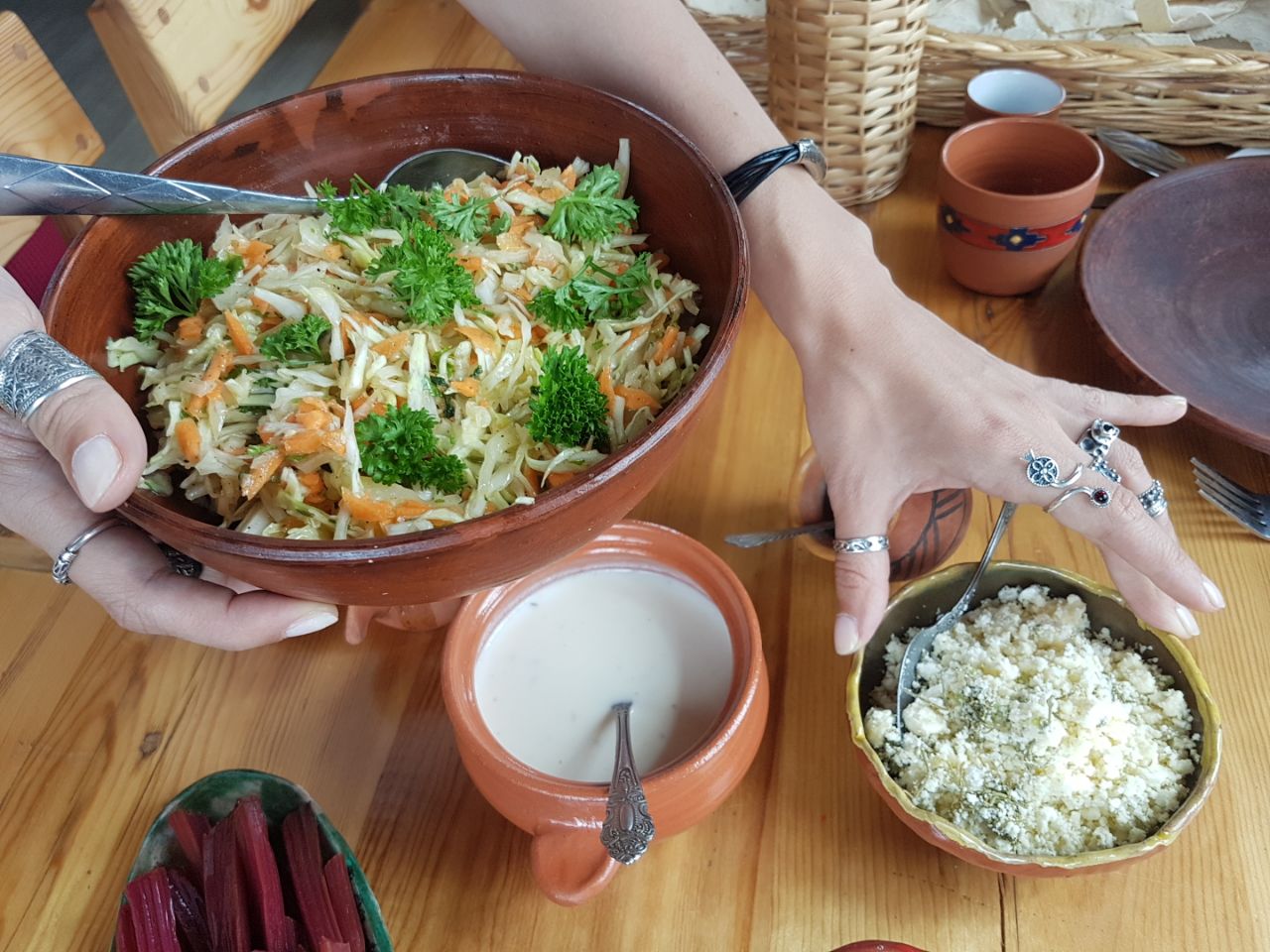
The kyalagyosh prepared by Zara is widespread throughout Syunik and Artsakh. Just like khash, kyalagyosh is a ceremonial dish. Friends and relatives gathered together, drank vodka, and people generally did not eat kyalagyosh alone at home.
The essential ingredients of kyalagyosh are fried onions, lentils, garlic, dried lavash, and, if desired, ghavourma.
Sisian Ceramics
Tel․ +37477554925 Zara Gasparyan
Fb: @SisianCeramics
WHAT TO DO
Day Two
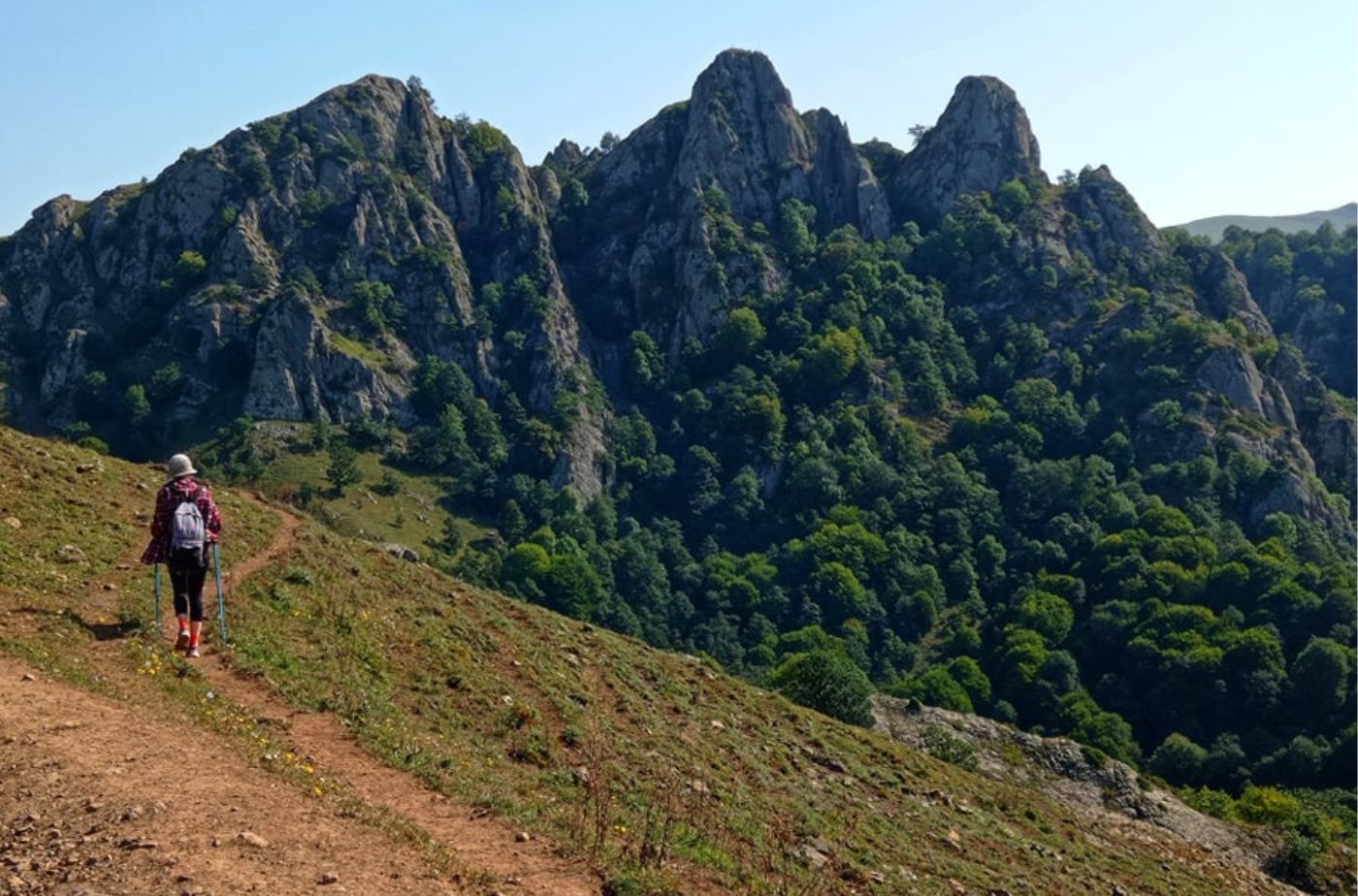
The next morning, together with local guide Katya, we head to the village of Ltsen, where we begin an 18-kilometer hike to the Tatev Monastery.
The route passes through forests and magnificent gorges, while beautiful landscapes accompany us throughout the journey.
I always choose local guides.
Why?
Because I often learn stories that cannot even be found on the internet.
For example, Ltsen was formerly known as Lizin, Litsin Tsats, and Ltse.
According to legend, during the Mongol invasion, the villagers poured a rain of stones down from the mountain, while the clergyman and poet Nerses encouraged them by shouting, “Fill it! Fill it!” (“Ltse! Ltse!”), from which the village eventually received its name.
According to the 1781 tax register, the village paid Tatev Monastery an annual tax of 2,250 units of fruit.
“18 km.” A Heavenly Moment.
We must constantly remember nature and always find time to connect with it.
As you walk, pay attention. You will hear the rustling of leaves, bushes, birds singing, insects buzzing, and grasshoppers chirping.
Do not overlook the surrounding plants. Notice their remarkable diversity.
Admire the vast fields and breathe in the fragrance of the season.
If you have spoken with the people of Syunik, you have probably noticed that the Vorotan River holds incomparable value for them.
The main river of Syunik makes the hike even more captivating and enriches every step of the journey.
This hiking route is equally interesting for experienced hikers and beginners alike.
My Tent Tours
Tel․ +37498937860 Katya Babayan
Fb: @mytenttours

WHAT TO EXPECT
My eco-journey continues, and Grandpa Zhora helps me appreciate and make use of nature’s gifts.
Born in Aghitu, Zhora has deeply cherished memories connected with this place. He spent his childhood by the river, and, as he says, the area was once abandoned and barren.
Decades ago, he decided to leave city life in Sisian and move to the steppe, which today has become a green valley thanks to many years of hard work.
Today, not only locals but also visitors from many different countries come here.
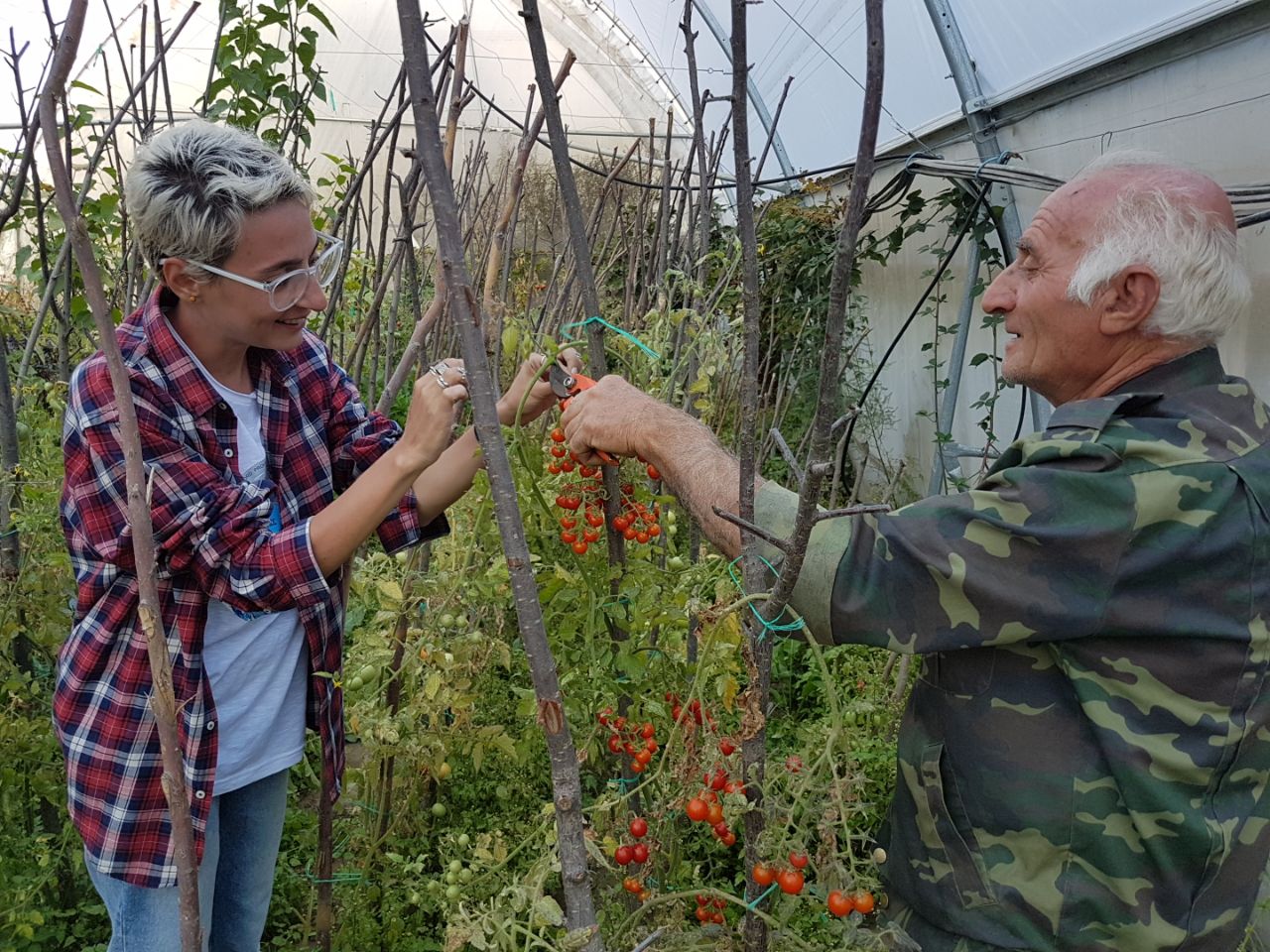
Grandpa Zhora introduces his environmentally friendly orchards and vegetable gardens.
Have you ever seen blooming asparagus?
I have.
As Grandpa Zhora explains, he had never been indifferent to asparagus. Whenever he saw it growing in flower gardens, he felt envious.
He tried growing asparagus himself, and after years of experimentation, he now offers his guests organic asparagus prepared over an open fire using a unique recipe.
Incidentally, the menu also changes according to the season.
The guardian of the forest and the spirit of nature, Grandpa Zhora, asked me for only one thing—to include the following words in this article:
“I inherited my love for nature from my father, kindness from my mother, devotion from my sisters, and loyalty from my brothers.”
So then…
Shall we head to Syunik?
Wild Gastro
Tel․ +37493650693 Artyom Hambardzumyan
Fb: @wildgastrosisian
This article was created within the framework of the My Armenia Program, funded by the United States Agency for International Development (USAID) and implemented by the Smithsonian Institution. The contents of this article are the sole responsibility of the authors and do not necessarily reflect the views of USAID, the Smithsonian Institution, or the United States Government.