“Zanan”: An Atmosphere That Takes You Beyond the Present

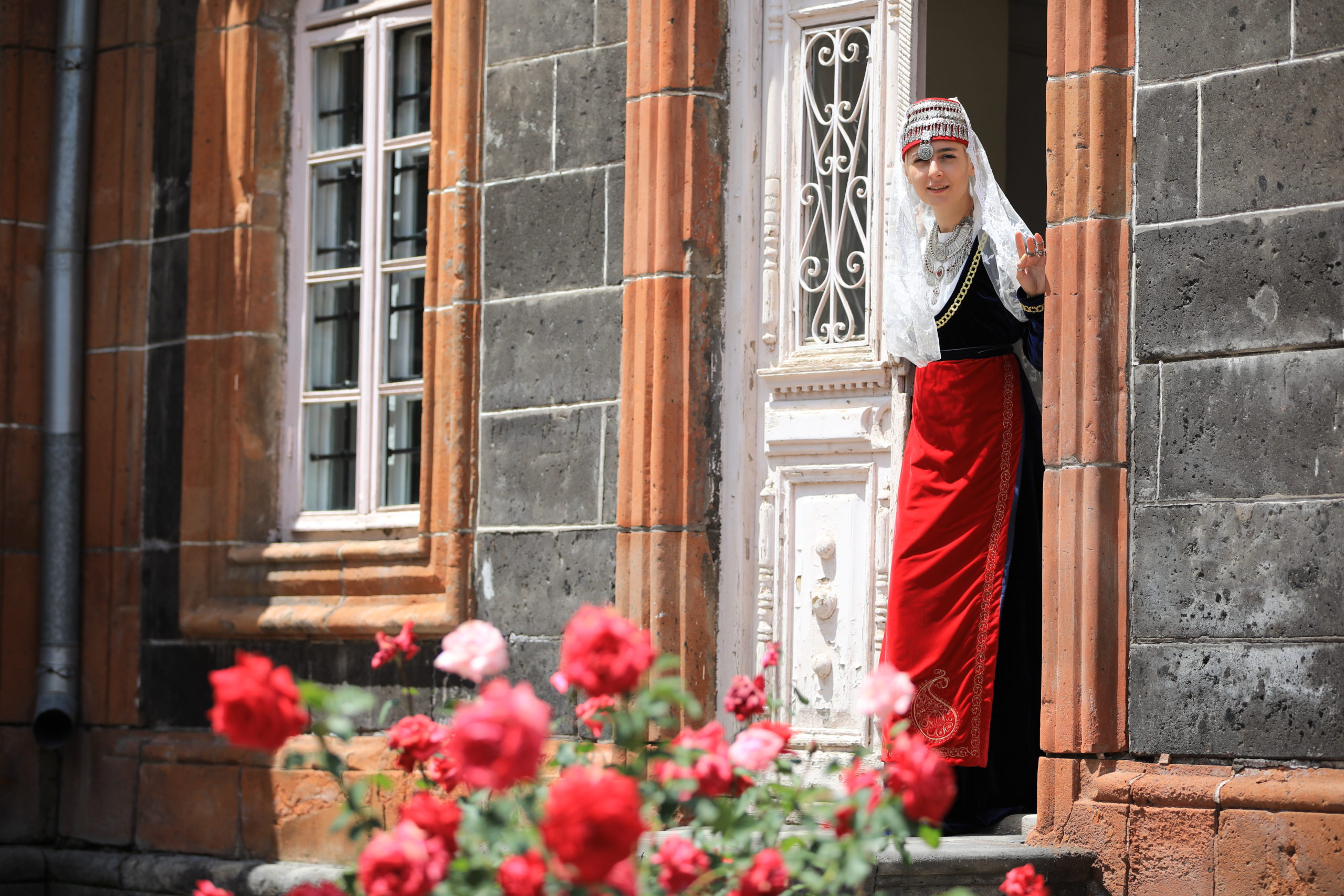

I find myself in the heart of Gyumri, within the historic Kumayri Museum-Reserve, on Varpetats Street, in the basement level of the Hovhannes Shiraz House-Museum. The cultural initiative I am about to tell you about is called Zanan. It occupies three interconnected basement halls with a separate entrance from the museum.
The name was chosen with purpose. In old Gyumri families, “Zanan” was a tender expression of affection. Fathers and grandfathers would lovingly call the daughters of the family Zanan instead of using their given names.
There is a theory that the Armenian word for traditional costume, taraz, is connected to the word for “letter,” because early Armenians embroidered the letters of the Armenian alphabet onto their garments. Armenian national costumes are dominated by the symbolic colors of the four elements of nature—earth, water, air, and fire. According to the 14th-century Armenian philosopher Grigor Tatevatsi, black represents the earth, white symbolizes water, red stands for air, and yellow embodies fire. Apricot signifies wisdom and prudence, red symbolizes courage and martyrdom, blue represents heavenly justice, and white stands for purity.
I learned all of this while I was being dressed in a traditional Armenian costume.
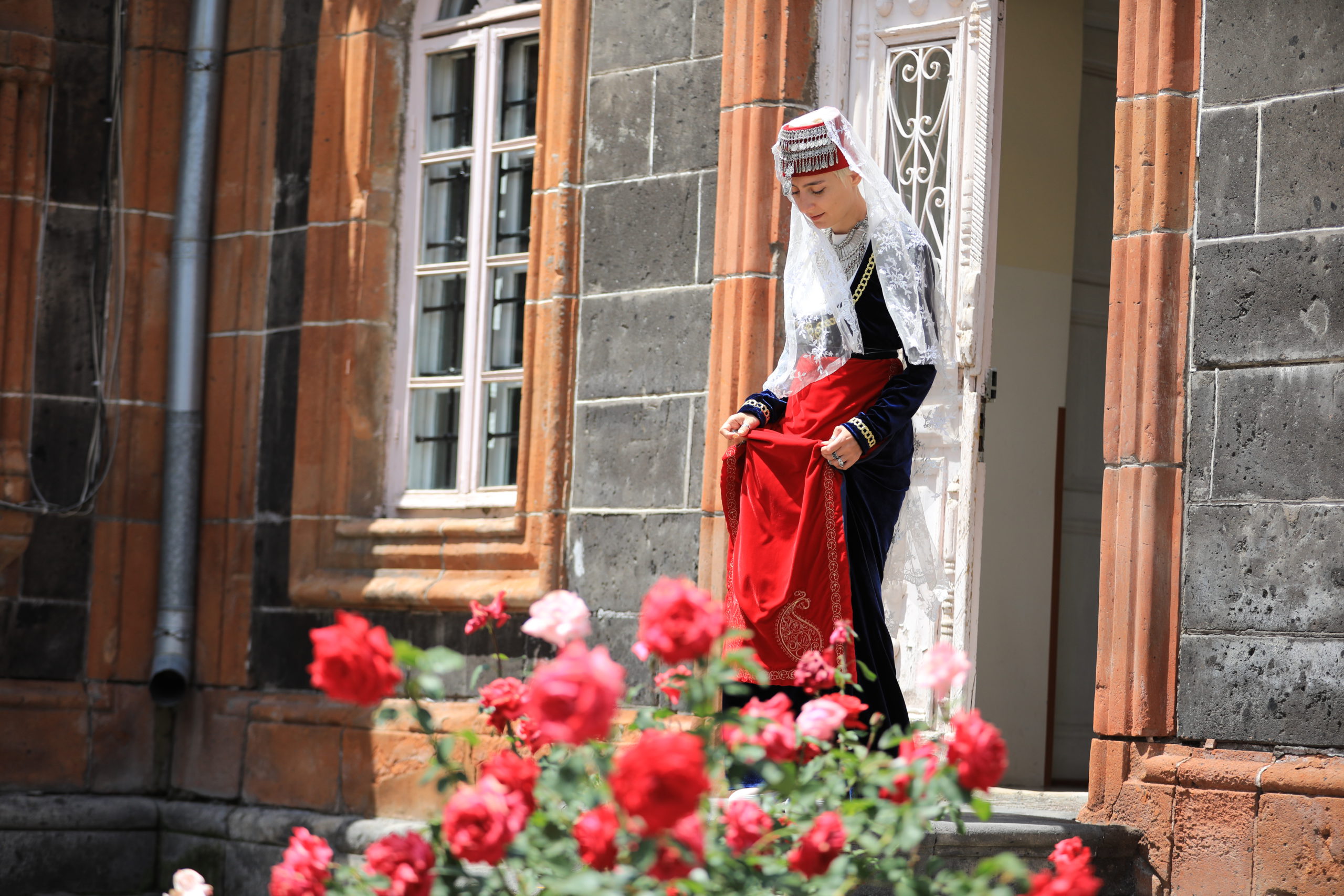
I chose the traditional costume of Gyumri.
A complete women’s costume consists of undergarments, outer garments, a headdress, and footwear. One of its essential elements was the red woolen apron, which played an important symbolic role in the life of an Armenian woman. It was worn during the period of engagement and marriage. The edges of the apron were embroidered with golden almond-shaped motifs. The almond symbolized fertility and abundance, expressing the hope that the bride would bring new life to her husband’s family. Sometimes, the first letter of the wearer’s name was embroidered within these decorative patterns.
My hairstyle and hair color certainly did not belong to the eighteenth century, but according to the story I invented for myself, I was a young woman living somewhere in the north when a broad-shouldered Armenian man, who had come there seeking work, saw me and fell in love with my unusual beauty—so different from the standards of the time. He brought me back with him to his homeland. How his family welcomed me, and what challenges we had to overcome together—that is a story for another day.
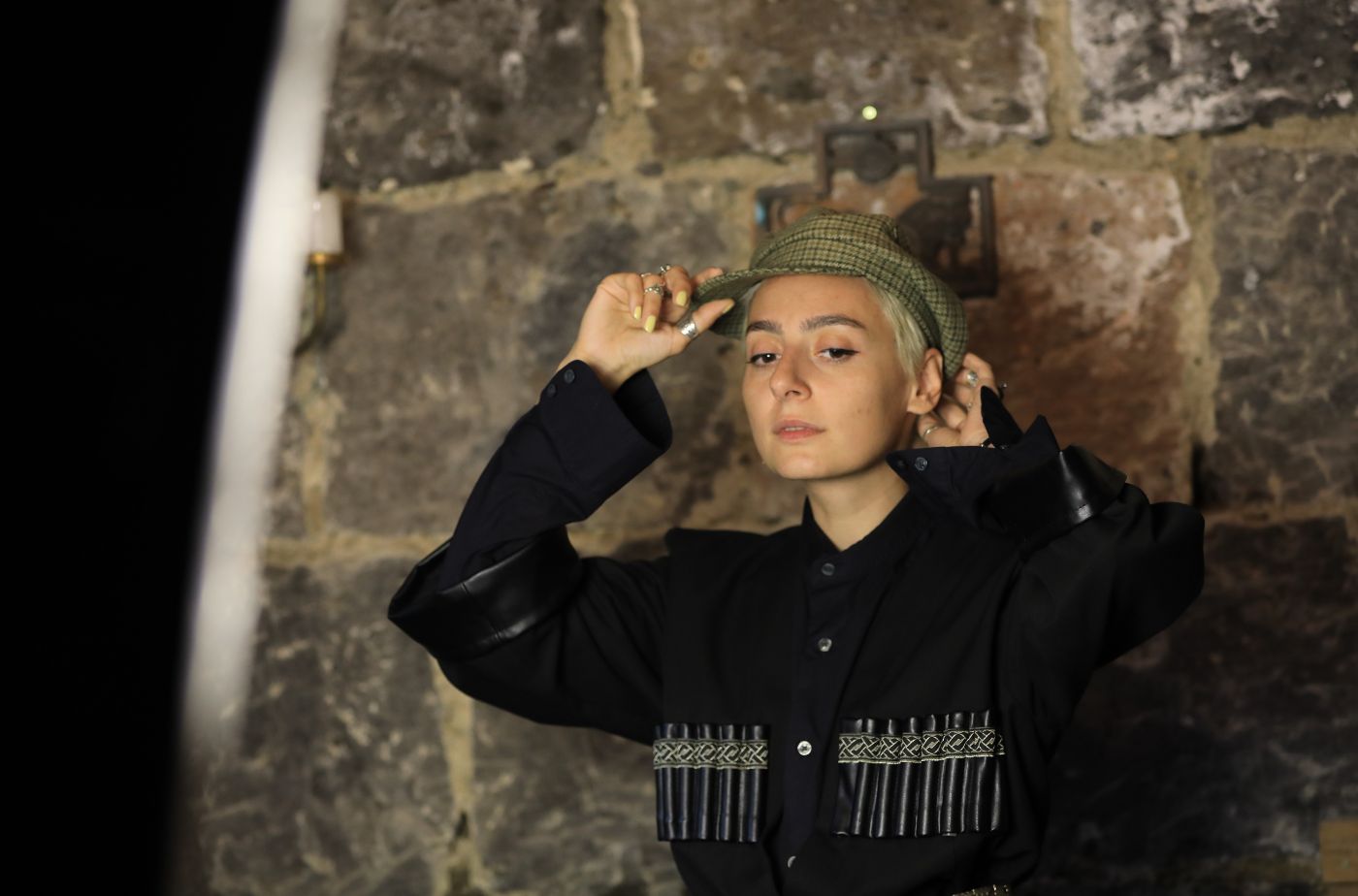
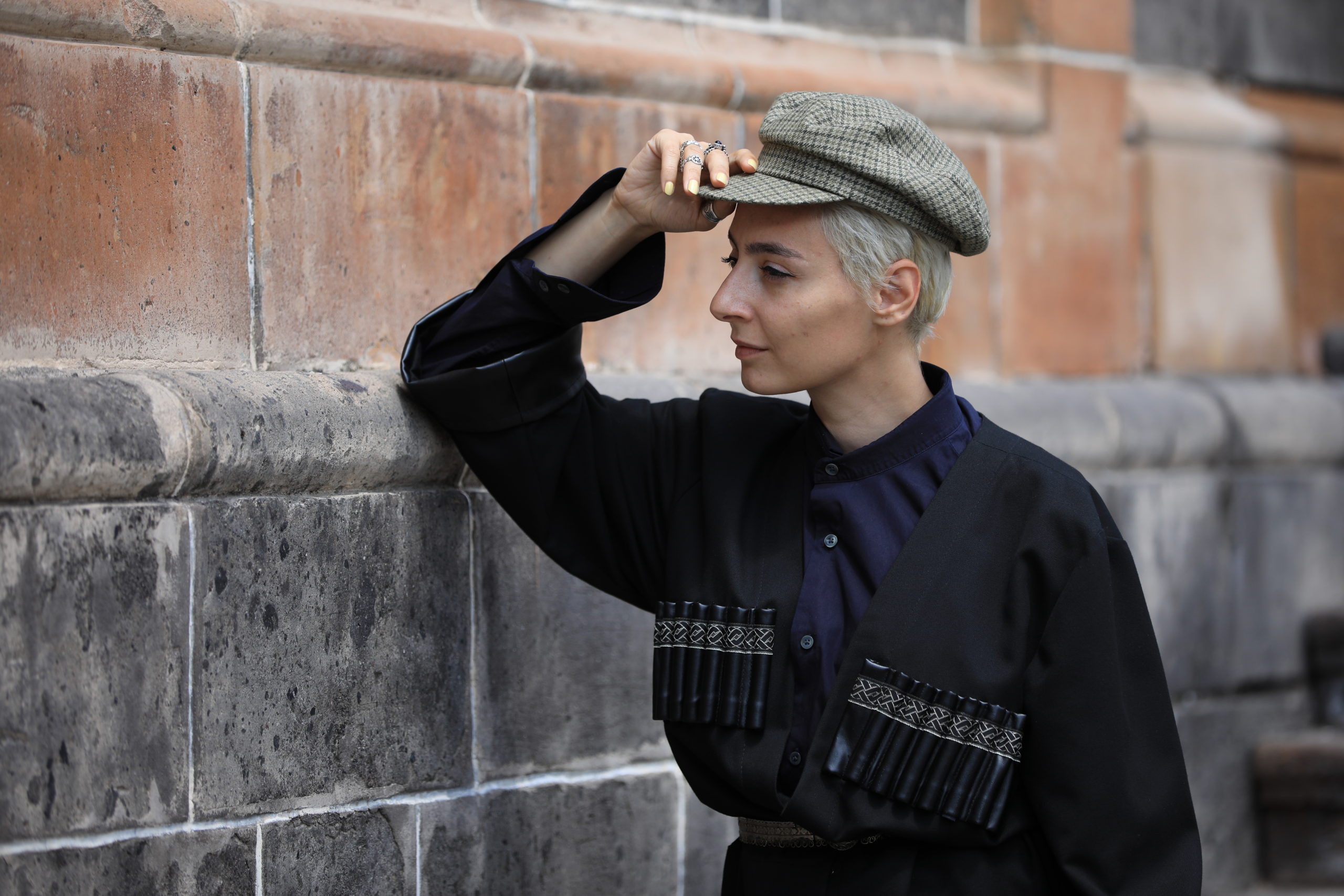
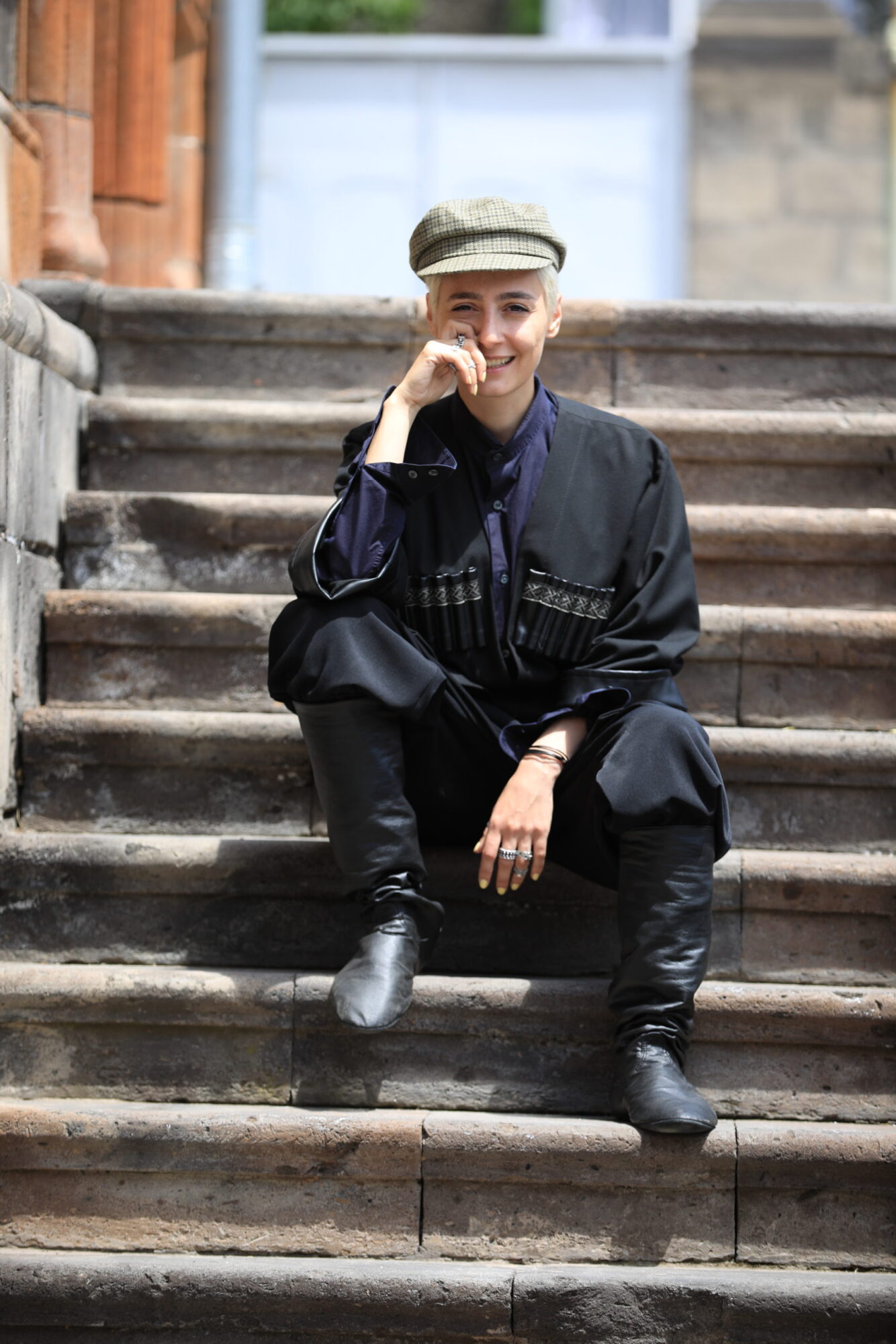
To experience something different, I also tried on a 19th-century men’s costume from Gyumri.
One of its most important elements was the traditional hat, known as the shapkha, which symbolized a man’s honor and dignity. There was even a humorous local tradition: when a man spent the evening drinking with friends and returned home intoxicated, he would order two horse-drawn carriages—one for himself and another for his hat. The hat always arrived first, giving the family enough warning that the head of the household was on his way home after a rather festive evening.
A man removed his hat only on three occasions: when entering a church, while at home with his family, and at the barber’s.
Today, Zanan’s collection includes traditional costumes and costume-inspired garments from many historical regions of Armenia, including Karin (Erzurum), Arabkir, Gyumri, Akhalkalaki, Mush, Van, and others, dating from the 18th to the 20th centuries.
The cultural house also organizes guided walking tours that introduce visitors to the history of Gyumri as the “City of Craftsmen.” During these tours, you discover fascinating stories about the city’s artisans, their traditions, everyday life, and customs, while learning about the many crafts practiced in 19th-century Alexandropol. Visitors even have the opportunity to participate in some of these traditional activities themselves.
If you enjoy transforming into a character from another era, Zanan offers an unforgettable experience: trying on authentic 19th-century Alexandropol costumes and being professionally photographed in them. Outdoor photo sessions can also be arranged at Gyumri’s historical landmarks or even in nearby villages for a more authentic atmosphere.
If you would rather create something with your own hands, Zanan also offers workshops in traditional Armenian Bird Letter (Trchnatar) art.
Guests can choose a beautifully outlined Armenian letter or ornamental motif inspired by medieval Armenian manuscript illumination, paint it on natural or artificial silk, and take home a unique handmade souvenir.
The Cultural House offers a welcome escape from everyday life—a place to calm the mind, relax, and immerse yourself in creativity. In addition to workshops, Zanan regularly hosts seminars, educational programs, and cultural presentations.
The building itself has its own remarkable story. It was constructed in 1868 by a wealthy Alexandropol merchant from the Keshishyan family.
I learned all these stories while sitting around a table with a cup of tea. Surrounded by Gyumri’s characteristically austere stone walls, yet embraced by an atmosphere of genuine warmth, Zanan Cultural House treated me to an unforgettable traditional tea prepared with herbs gathered from Armenia’s fields. As I sipped every fragrant cup, I listened to amusing stories and anecdotes told in Gyumri’s distinctive dialect—an experience that made me feel as though, for a little while, I had truly stepped into another century.
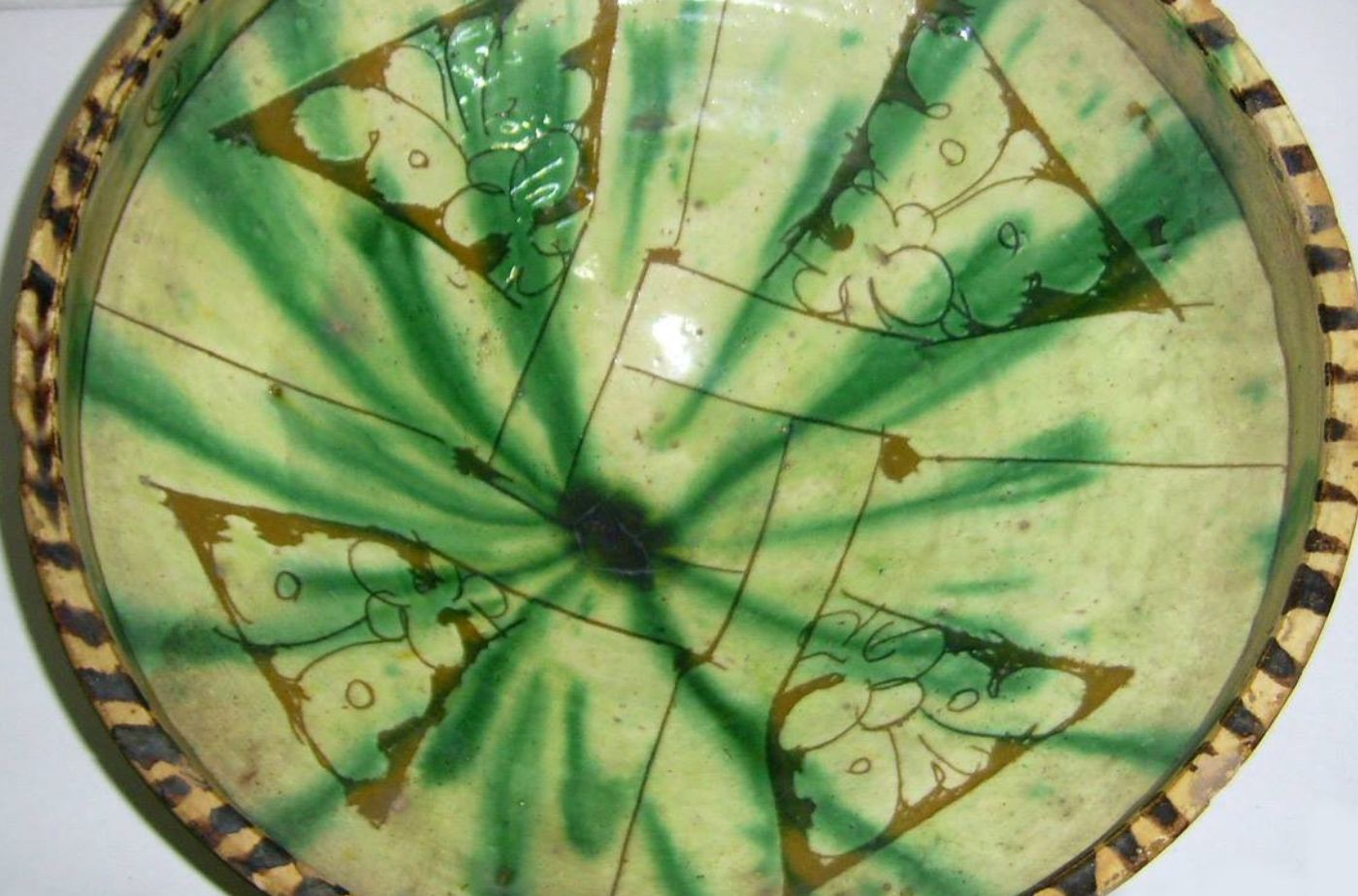
Ներկայացնում եմ, թե ինչ բաց կթողնեք, եթե լինեք Եղեգնաձո

Հայաստանում ձմեռը սկսվում է նոյեմբերի վերջ/դեկտեմբերի
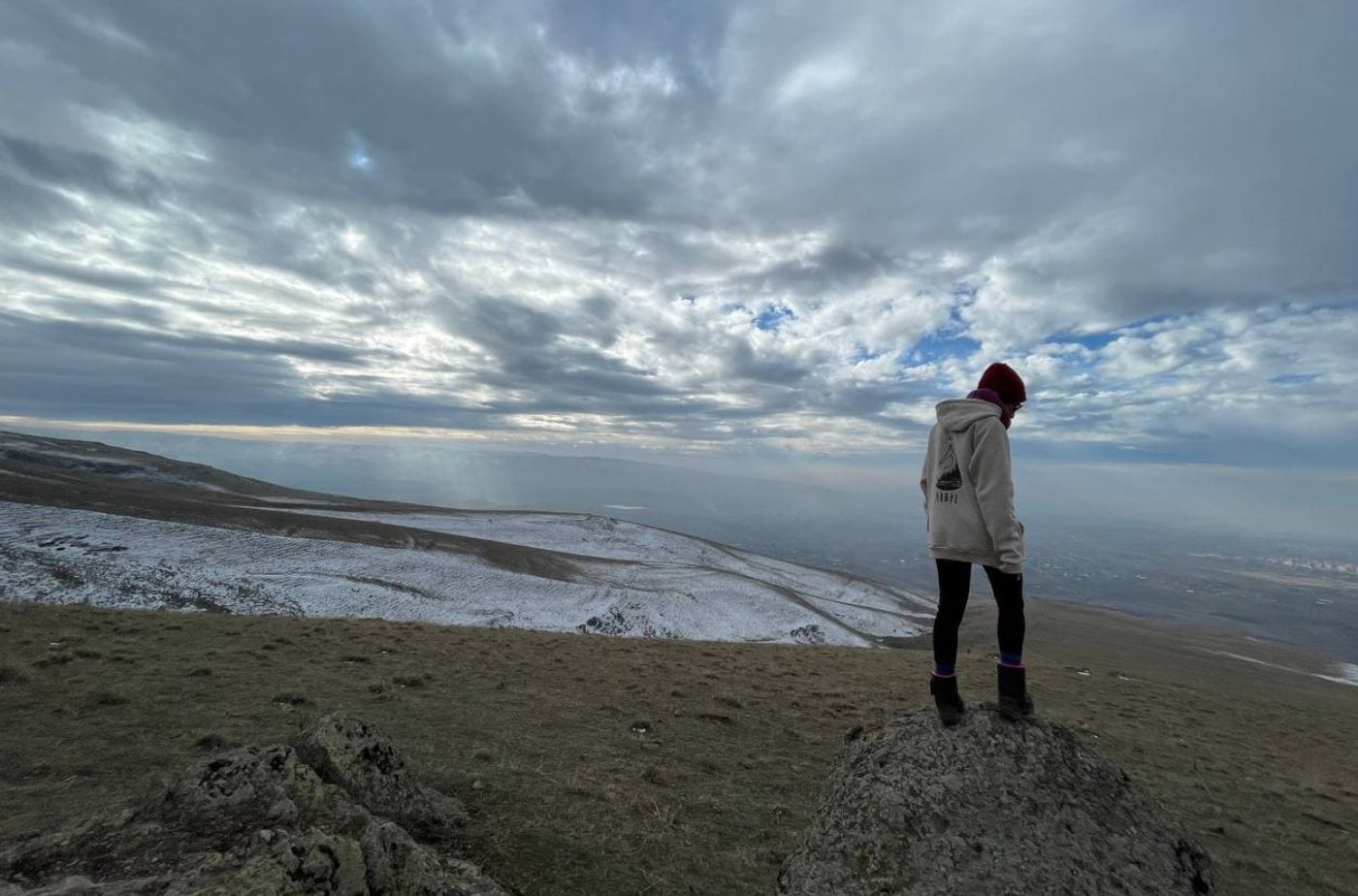
Շատ հաճախ, երբ հեռվից ես դիտում լեռներին, բերկրանքը միգ