Fioletovo: Visiting the Molokans
The Molokans living in our country have been freely living in Armenia for 200 years, preserving their unique character, traditions, diligence, and honesty. They are a rather closed community and have always been perceived that way. The Molokans are not a national minority in Armenia, but a religious group within the Russian ethnic community.
Mikhail and Natalia Rudamyodikinn receive tourists during the summer, but before visiting them, you should definitely call in advance, just as I did.
The story is as follows:
Their ancestors were the first to come here in 1835. The village in Lori Province was initially called Nikitino, and later the Soviet authorities renamed it Fioletovo. Everyone was a farmer, a craftsman, or a cattle breeder. They engaged in animal husbandry and cultivated fields and gardens.
“You know, wherever a person is born, that is what they consider their homeland. We were born here, and this is our homeland, our home,” admits Mikhail Rudamyodikin.
“I studied at Fioletovo Secondary School and have eight years of milking experience. I was 13 years old when I built a workshop for myself. By the age of 20, I had already built half of my house. That is how I became attached to craftsmanship. What I can do, very few people can do. I make various Korean graters for preparing pickles. I have made many barrels, doors, windows, and wooden shutters. Recently, I no longer work as a carpenter. I have also built stoves; I started making stoves a long time ago.”
As the craftsman admits, he saw how a stove was built only once, after which he remembered everything. At the Ethnographic Museum of the Russian Federation, which was an open-air museum, he built the largest Russian stove in the world, as well as stoves from ten other regions of Russia.
“The stove is built from red, raw bricks that are not fired and retain heat very well. It is made with a specific ratio of clay and sand. Everything must be mixed together and left on the ground for two weeks to ferment, so that it becomes soft and does not crumble. Only after that does the construction of the stove begin. Did you know that you can also sleep on a Russian stove? Sleeping on the warm bricks is both pleasant and healthy,” adds the craftsman.
They also have a Russian stove in their home, but after the earthquake it became unsafe, so he dismantled it and rebuilt it.
Mrs. Natalia told me that they prepare meals for tourists, and anyone who wishes is always a welcome guest.
“Our nature is very beautiful, the air and water are very clean. While working, we sometimes do not even notice the flowers and various herbs growing around us—we simply do not have the time. I prepare different herbal teas from those herbs. I gather raspberries, mushrooms, and wild currants from the forests—they are very aromatic. Sometimes my husband and I take turns visiting our children in Russia, but in general I cannot and do not want to leave Armenia. My home is here.”
Mrs. Natalia says that in the past they cooked borscht in a cast-iron pot inside the stove, and it turned out wonderfully. Everything was placed into the pot at once, slowly stewed, and absorbed the aroma of the smoke, creating an excellent taste. Homemade noodles were also delicious. They prepared them themselves, dried them in the Russian stove, then cut them and cooked them in meat broth.
Throughout the entire conversation, I was holding my breath, waiting for the secret recipe of Molokan pickles, because my grandmother also often prepares Molokan pickles, yet the taste is different.
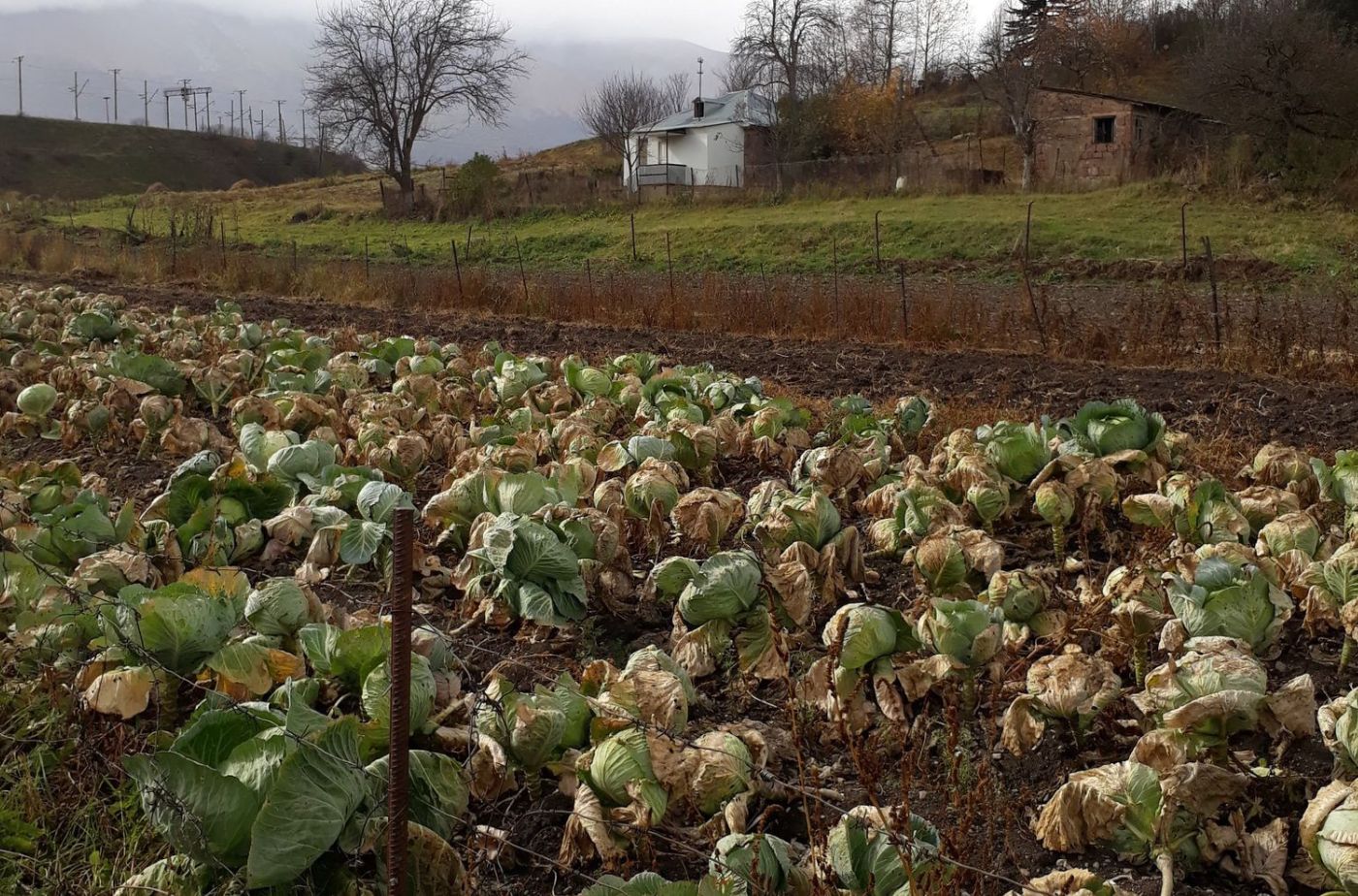
Here, Mrs. Natalia explained that they grow their own varieties of cabbage, especially white cabbage, which is very sweet. For example, Armenian cabbage does not release juice when salted, while their cabbage is very juicy and sweet. There is so much juice that it even overflows. They prepare pickles however they like, adding parsley or bay leaves. There is no secret at all—only salt and carrots are absolutely necessary. Finally, smiling, she added:
“Still, I think the taste of the pickles depends on our hands, or perhaps on how much we love doing it.”
The Rudamyodikin couple also shared that their children have worked from an early age. For example, their son started mowing and bundling hay at the age of five, even though his hand had been burned at the time.
“In general, all children are hardworking. We do not need lazy children, and we teach them diligence from childhood. If we plant cabbage, they water it after us. Let them work, let them learn to live by their own labor instead of waiting for someone else to help them. God does not love lazy people,” the couple added in conclusion.
I spent the rest of the day walking around the garden, tasting delicious pies and herbal tea, but I promised that I would return again during the pickle-making season.