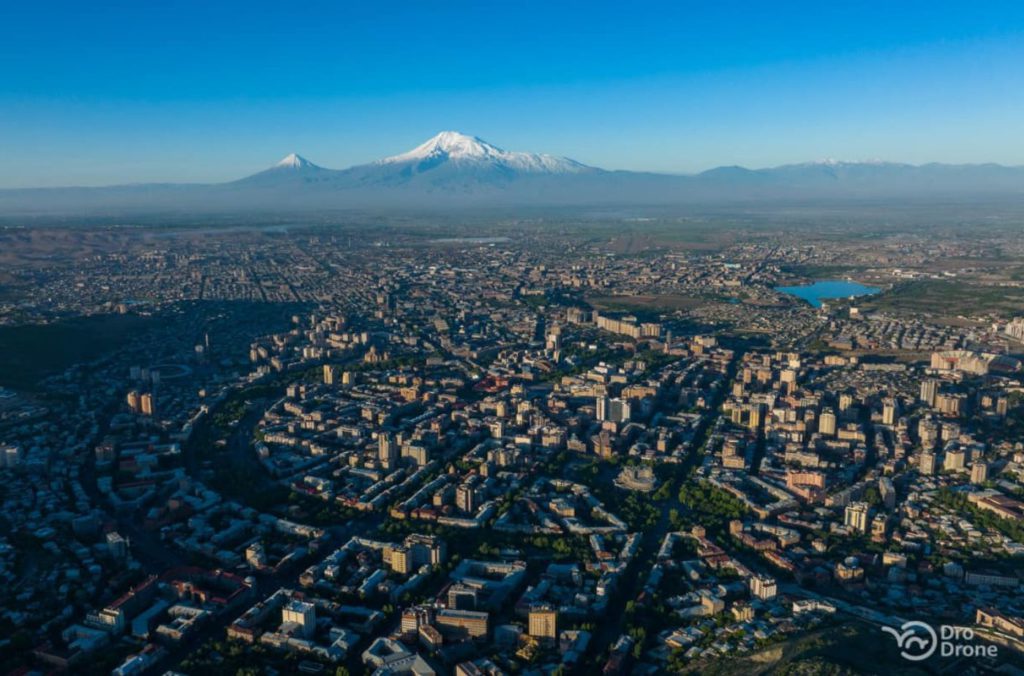
34 Incredible Places in Armenia
Armenia is a magical country. Here we are warm, hospitable, and generous, and every traveler feels like a close friend. Armenia is an ancient land where thousands of years of history intertwine with breathtaking nature and dramatic mountain landscapes. I present to you 34 places—if you are in Armenia, don’t waste a moment. Winding roads will take you back to medieval times and a glorious past. Legends are everywhere here; you only need to listen carefully and enjoy the full charm of the country.
Yerevan
Matenadaran
With more than 23,000 manuscripts, amulets, fragments, and around 300,000 archival documents, the Matenadaran preserves nearly all fields of ancient and medieval Armenian science and culture. Its manuscript collection is one of the largest in the world. The word “Matenadaran” means “library” in classical Armenian.
More than 14,200 manuscripts are in Armenian, while the rest are in foreign languages. Some rare works survive only in translation, as the originals have been lost. The smallest manuscript is the Tona-tsuyts (1434), weighing only 19 grams, while the largest is the Msho Charentir (1200–1202), weighing 27.5 kg. The oldest fragments date back to the 5th–6th centuries.
The institution is named after Mesrop Mashtots, the creator of the Armenian alphabet in 405 AD.
Website: matenadaran.am
Address: 53 Mashtots Avenue
Cascade Complex
Are you ready to climb 572 steps?
One of Yerevan’s landmarks, the Cascade Complex begins at the monument of architect Alexander Tamanyan. The sculpture rests on a large stone supported by two smaller ones, symbolizing the connection between old and new architecture.
Inside, escalators make it easy to reach the top, where you can enjoy breathtaking views of Yerevan and then walk down the exterior stairs at your own pace.
For many, Cascade is a meeting point filled with cafés, but it is also an important cultural space. The Cafesjian Center for the Arts hosts contemporary exhibitions, while the nearby Museum of Russian Art displays works of great Russian painters.
Erebuni Archaeological Museum-Reserve
The history of Yerevan begins here, at one of the world’s oldest fortresses. An inscription reveals that King Argishti I built Erebuni in 782 BC. Modern Yerevan is its direct heir, making it one of the oldest continuously inhabited cities in the world.
Erebuni is the only open archaeological site in Yerevan. Excavations have uncovered rich Urartian cultural layers, including 23 cuneiform inscriptions.
Website: erebuni.am
Address: 38 Erebuni Street
Armenian Genocide Memorial Complex (Tsitsernakaberd)
Located on a hill overlooking Yerevan, Tsitsernakaberd offers a powerful panoramic view, especially at sunset.
Every April 24, thousands gather here to honor the 1.5 million victims of the Armenian Genocide in the Ottoman Empire. Visitors from around the world lay flowers at the eternal flame. The memorial includes a museum, which is free to enter and highly detailed.
The architecture becomes especially striking at night, when it is illuminated. Next to it stands the massive sports and concert complex shaped like a bird with open wings.
Address: Tsitsernakaberd Highway 8/8
Website: http://www.genocide-museum
History Museum of Armenia
If you want to explore Armenia from prehistory to the present, this is the place. The museum holds around 400,000 items across archaeology, ethnography, numismatics, and documents.
Above it is the National Gallery of Armenia, one of the largest collections of Armenian fine art in the world.
Address: Republic Square 4
Website: historymuseum.am
Megerian Carpet Museum
Here you will discover Armenia’s centuries-old carpet weaving tradition. Carpets were once essential items in Armenian households.
One of the most emotional exhibits is a 160-year-old carpet divided during the genocide so that two sisters could later recognize each other—and they did, 50 years later.
The museum also houses a 400-year-old Vaspurakan carpet and a replica of the famous Pazyryk carpet.
Website: megeriancarpet.com
Address: Madoyan Street 9
Syunik
Khndzoresk “Swinging Bridge”
Traveling in Armenia brings a wide range of new impressions and emotions. Excitement, admiration, fear, surprise—the feelings of people on the “Swinging Bridge” are diverse and never repeat themselves.
The bridge, built in just a few months, is 160 meters long and 63 meters high.
Today it is known among tourists as the Khndzoresk “Swinging Bridge”, connecting two parts of the village—from Old Khndzoresk to the tomb of Mkhitar Sparapet—while preserving the historical atmosphere of the village and the purity of its nature.
Address: Khndzoresk village
Lichk Waterfalls
Hidden treasures. Recently, even locals discovered the Lichk Waterfalls, which originate from the Zvaraget River.
Flowing from the high slopes of the Meghri mountain range, the river forms a cascade of waterfalls in its lower course. The melody of the water, I assure you, can completely cut you off from urban noise.
Under each waterfall there are natural pools where you can swim. Thanks to the high altitude, the water is incredibly pure—you realize that nature is truly a creator.
Address: Lichk village
Old Khot
The “Armenian Machu Picchu” is one of the ancient settlements of Syunik. Old Khot has a much older history than Machu Picchu.
It is located 67 km northeast of Kapan. The village was inhabited until the 1970s, after which residents moved to a newer, more convenient area—modern Khot village.
Around the old settlement are burial grounds dating back to the 2nd–1st millennia BC, ancient cemeteries, and ruins of the 12th-century Red Monastery (Karmir Vank).
According to legend, the bells of this church were famous for their powerful sound, and this is linked to the origin of the name “Zangezur.”
Address: Khot village
Goris Museum of Local Lore
If you arrive in Goris, you should definitely visit the local ethnographic museum located in the central square—you won’t miss it.
I will highlight only two exhibits.
The first is a lion figurine dated to the 7th century BC, weighing 5.5 kg. This Urartian-era artifact found in Syunik confirms that the region was part of the Kingdom of Van.
The second is a five-faced idol dating back to the 2nd millennium BC. According to researchers, it may represent either five deities (similar to those mentioned in Egypt) or a symbol of five civilizations after a great destruction 12,000 years ago. Similar cult traces exist in Indian and Egyptian civilizations.
Address: Goris city, 5 Mashtots Street
Vayots Dzor
“Birds Cave” (Areni-1) and Noravank
The Areni cave, also known as the “Birds Cave,” is one of the most popular destinations in Vayots Dzor. Not visiting it means missing an important part of Armenia’s ancient heritage.
In 2010, archaeologists discovered a 5,500-year-old shoe here—the oldest leather footwear ever found in the world. Other excavations revealed winemaking facilities, considered among the oldest in the world, dating to the 4th millennium BC.
Continuing through the canyon, you arrive at Noravank, rising among red cliffs. The monastery was founded in the 12th century on the site of earlier churches.
With its rich carvings, unique khachkars, and valuable inscriptions, Noravank is considered a unique cultural heritage site. It is also one of the few Armenian monasteries associated with more than one architect.
According to legend, the architect and sculptor Momik falls in love with the beautiful daughter of the Syunik prince. The prince agrees only on one condition: Momik must build a magnificent temple in a very short time. When he is nearly finished, the prince orders a mercenary to push him from the monastery dome. Momik is buried where he falls; he had already carved his own tombstone-khachkar.
Address: Areni village
Selim Caravanserai
Located on the 14th-century Vardenyats Pass (formerly Selim Pass), this caravanserai served traders along the Silk Road.
Marco Polo is said to have passed through here and described how Armenians lived in these harsh mountains.
According to legend, the son of a Kurdish leader falls in love with a girl from Gegharkunik and travels often to meet her. One winter, he loses his way in a snowstorm and dies. In his memory, his father builds a caravanserai so travelers can rest safely.
Address: Yeghegnadzor–Martuni highway
Jermuk Mineral Water Drinking Gallery
The first stop in Jermuk should be the drinking gallery, where mineral water flows from different taps depending on temperature. Be careful not to overdrink—the consequences can be unpleasant.
Locals associate this place with childhood memories, where they would come in cold weather just to warm their hands on the taps.
No visit to Jermuk is complete without seeing the deer statue, the city’s symbol.
According to legend, a wounded deer was healed after entering the mineral waters, and the miraculous healing properties of Jermuk’s water became known worldwide.
Address: Jermuk city
Smbataberd Fortress
Smbataberd is one of the largest and most impregnable fortresses in Vayots Dzor and Syunik. It may have existed even before the 5th century.
Historical sources mention a bloody battle between Armenians and Persians near the fortress in the 5th century. It was further strengthened during the Orbelian dynasty.
Its exact original name is unknown; it is traditionally called Smbataberd, possibly after Prince Smbat of Syunik.
Address: Artabuynk village
Shirak
Lake Arpi
Here you can observe 670 plant species, 20 of which are listed in the Armenian Red Book. There are 190 bird species, 45 of which are also protected.
The area is recognized by BirdLife International as an Important Bird Area.
Locals say the best time to see the lake’s full beauty is in the evening, when you may spot a rare black stork.
Address: Ashotsk plateau
Yereruyk Temple
Located near the ancient capital Ani, on the left bank of the Akhuryan Gorge in Anipemza village, Yereruyk Temple dates back to the 4th–7th centuries and is built from orange tuff stone.
Address: Anipemza village
Gyumri – TUMO
The old white building of Gyumri’s theatre, formerly the “People’s House,” is located at the entrance of the Central Park.
Built 150 years ago through local donations, it hosted concerts, literary evenings, and theatrical performances.
In 1912, the opera “Anoush” was first staged here—the beginning of Armenian national opera.
Today it is a TUMO learning center, where teenagers design their own education paths. The building was designed by Lebanese architect Bernard Khoury.
Address: Gyumri, 1 Shchors Street
Aragatsotn
Dashtadem Fortress
The exact construction period is unknown, but it was built on Urartian fortress foundations, likely in the 5th–7th centuries by the Kamsarakan family.
Unlike many Armenian fortresses, it has no natural protection such as cliffs or rivers; its defense relied entirely on massive walls.
Address: Dashtadem village
Byurakan Observatory & Orgov Radio Telescope
Astronomy feels both real and unreal at the same time. A visit here is like opening a window into the universe.
Academician Viktor Hambardzumyan worked here. The observatory is a major astronomical center for the region.
Nearby stands the Orgov radio-optical telescope, a massive structure that feels like science fiction. It was once included in the USSR registry of inventions.
Address: Byurakan / Orgov villages
Amberd Fortress
Standing before Amberd, you imagine a powerful, undefeated old warrior.
The fortress was especially prominent in Roman times and later expanded in the 7th century under the Kamsarakan dynasty.
It served as a summer residence for Armenian kings and princes.
Address: Byurakan area
Armenian Wine History Museum
Located underground at a depth of 8 meters in basalt formations, this museum presents the history of winemaking in Armenia and its cultural significance.
It also offers wine tours, tastings, dinners, and vineyard visits.
Address: Sasunik village
Website: winemuseum.am
Lori
Akhtala Monastery Complex
Akhtala is one of the most impressive monastic complexes, known for its huge frescoes and cultural richness.
According to legend, the bright fresco colors distracted worshippers, and the priest ordered them to be covered with lime.
French archaeologist Jacques de Morgan discovered burial sites here with ceramic, bronze, and iron artifacts, including seated burials.
The complex is also linked to filmmaker Sergei Parajanov, who shot scenes of The Color of Pomegranates here.
Address: Akhtala town
Haghpat and Sanahin Monasteries
These UNESCO-listed monasteries (1996, expanded in 2000) are masterpieces of medieval Armenian architecture.
Haghpat and Sanahin were built in the 10th–13th centuries, 13 km apart, and complement each other in style and history.
According to legend, the name “Haghpat” comes from the phrase “Hagh pat” (“solid wall”) said by a master architect after reconciliation with his son.
Ararat
Khosrov Forest Reserve
A fascinating journey not far from Yerevan. Azat Reservoir offers stunning reflections of red cliffs.
Khosrov Forest Reserve was founded in the 4th century by King Khosrov II as a hunting ground and later became a protected reserve in 1958.
It includes waterfalls named after pagan deities Vahagn and Astghik. According to legend, Astghik bathed in rivers at night, and mist covered the land—hence the name “Mush.”
Khor Virap
“Khor Virap” means “deep pit.” Saint Gregory the Illuminator was imprisoned here for 13 years.
After his release and healing of King Tiridates III, Christianity became the state religion of Armenia.
Today visitors can descend into the underground cell. The monastery offers an iconic view of Mount Ararat.
Until the 18th century, it was also a manuscript center.
Address: Lusarat village
Kotayk
Garni, Geghard, Symphony of Stones
Garni Temple is the only surviving Greco-Roman-style colonnaded temple in Armenia, dedicated to the sun god Mihr.
The complex includes a Roman bathhouse and a 7th-century church with a mosaic floor made of 15 types of stone.
Before Garni, stop at Charents Arch for a stunning view of the Ararat plain.
Nearby, the “Symphony of Stones” in Garni Gorge features basalt columns formed by lava flows.
Geghard Monastery, carved into rock, is a 4th-century masterpiece surrounded by cliffs and springs.
Bjni Fortress
A major medieval fortress, possibly connected by underground passages to Bjni Monastery, used for transporting supplies during sieges.
Although partially excavated, the tunnel is considered by many scholars to be a legend.
Address: Bjni village
Gegharkunik
Lake Sevan & Noratus
Lake Sevan is ever-changing—calm, wild, gentle, and powerful.
Noratus is the largest medieval khachkar cemetery. According to legend, villagers once dressed khachkars as soldiers to scare invading Turks.
Another legend tells how villagers escaped Mongol invaders through a secret monastery exit.
Hayravank Monastery
Located on a rocky peninsula on Lake Sevan, Hayravank offers a unique architectural design where circular interiors are visible from outside.
Excavations revealed ancient dwellings and artifacts, including clay idols and vessels.
Armavir
Mother See of Holy Etchmiadzin
The Mother See of Holy Etchmiadzin was built in the early 4th century, between 301–303 AD, after Christianity was adopted as the state religion, by the order of Gregory the Illuminator. It was constructed on the site of a pre-existing pagan temple, symbolizing the transition from paganism to Christianity.
According to Agathangelos’ History of Armenia, during a night of solitude and contemplation, the Illuminator saw a magnificent vision: the Only Begotten Son of God descended from heaven and struck the ground with a golden hammer, indicating the place where the Cathedral of Etchmiadzin should be built. From here comes the name “Etchmiadzin,” meaning “the Only Begotten descended” in Old Armenian.
The Mother See is built upon flowing waters, and the arrangement of stones allows the structure to sway during earthquakes, preventing collapse. These waters also feed the cathedral’s inner well, considered miraculous.
According to legend, the water has healing properties. The well is about 7 meters deep, and interestingly, the water level remains constant throughout the year.
Address: Etchmiadzin city
Metsamor Museum
All my guests are always taken to the Metsamor Museum. Why? Because here you can see enormous traces of the pre-Christian era—something that will truly astonish you.
Rituals, baths, production systems, and many other aspects of ancient life are presented here in a way that leaves a deep impression. Be careful when walking in the outdoor archaeological area—every small fragment of soil holds immense history.
And we arrive at my favorite part: the basement exhibition of gold artifacts. Here you can see how refined and sophisticated our ancestors were. Experts still cannot fully explain the techniques used to create these objects. Fascinating, isn’t it?
Address: Taronik village
Tavush
Lastiver
Lastiver is a perfect place to escape everyday life and reconnect with nature. Here you can find caves where hermits once lived.
Surrounded by dense forests, there are unique treehouses and wooden cabins where you can even stay overnight.
The beauty of Tavush’s nature is impossible to ignore. You can also visit Yell Extreme Park, where your personal adventure in the heart of nature awaits.
Berdavan (Ghalinjakar) Fortress
We continue our journey to one of the most impressive medieval Armenian fortresses—Berdavan or Ghalinjakar Fortress, which today stands in a magnificent and striking condition.
Berdavan is located northwest of Koghb, on a hill near the Azerbaijani border. The site contains a large collection of ancient khachkars.
Nearby is the medieval Ghalinjakar fortress, first mentioned in written sources in 1123. It was likely renovated in the late Middle Ages. In 1983, the site was cleaned and restored, with sections of the walls and towers reconstructed, including two northeastern towers.
According to tradition, King Ashot II “the Iron” of the Bagratuni dynasty once stayed at the fortress for several days during one of his journeys.
Address: Berdavan village
Lake Gosh
Like most Armenian churches, Goshavank is built on a hill. As you climb toward the monastery, you cannot help but admire the generous nature of the Tavush region.
The monastery was founded by the medieval scholar, fabulist, and jurist Mkhitar Gosh. It was once an important center of spiritual culture and manuscript writing. Subjects taught here included law, history, philosophy, rhetoric, miniature painting, music, and calligraphy.
Gosh Lake is located in the heart of the Dilijan Reserve. This natural treasure, hidden within the forest, is a favorite destination for both tourists and locals seeking peace away from the city noise.
The lake is especially beautiful in early autumn, when the trees change color and reflect on its mirror-like surface.
To reach it, one must hike or use off-road vehicles, as regular cars cannot access the road.
The article was prepared for 34travel
Main photo: DroDrone