Salome: Unveiling the Mystery
Vardges Sureniants created not merely a painting, but a profound meditation on the human condition. This is a work that invites contemplation.
With its captivating beauty and emotional resonance, Salome testifies to the enduring power of art. Why? Because it has the ability both to enchant and to provoke.
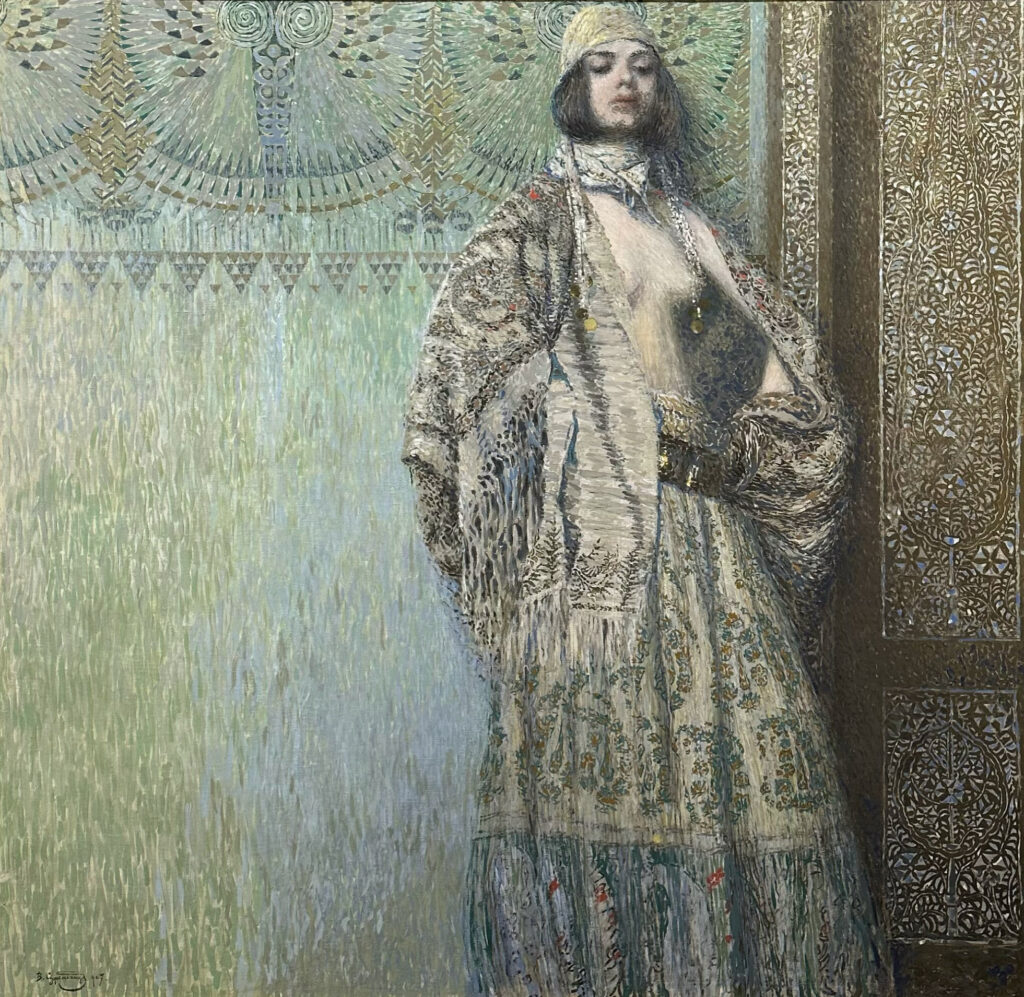
Sureniants’ Salome is not simply a portrait of a woman; it is a work filled with symbolism and enigmas. In the corner of the painting stands the figure of Salome, embodying beauty, mystery, and power. Her gaze and gestures capture the viewer’s attention, prompting reflection on her inner world and destiny.
Did You Know?
Created in 1907, Salome is one of Vardges Sureniants’ most impressive and influential masterpieces. Owing to the growing European fascination with the East at the end of the 19th century, the legend of Salome experienced a revival. English Symbolist playwright Oscar Wilde’s Salome (1891) caused a sensation and became a source of inspiration for painters, sculptors, and musicians.
According to the New Testament, Herod Antipas, King of Judea, married Herodias, the wife of his brother. John the Baptist condemned this immoral union, and at her mother’s urging, Herodias’ daughter demanded the head of John the Baptist from Herod in exchange for her Dance of the Seven Veils.
In Wilde’s play, Salome is portrayed as a teenage girl in love with John the Baptist. Repeatedly rejected by him and consumed by a desire for revenge, she demands his head from Herod as the reward for her dance.
Interesting to Know
Sureniants deliberately abandoned the traditional iconography of Salome, portraying her without the head of John the Baptist. Before us stands a woman overwhelmed by turbulent emotions and experiences, which she attempts to conceal by lowering her gaze.
A master of conveying subtle psychological states, Sureniants expressed all this through the composition, the rhythm of lines and ornaments, the figure’s posture, gaze, and color palette. The low viewpoint, asymmetrical composition, and delicate dotted and linear brushwork that permeate the entire canvas intensify the painting’s dramatic effect and fill it with a restless vibration.
This highly valuable artistic work rightfully ranks among the finest representations of Salome—and of womanhood in general—in world art.
Important
Before finding its permanent home at the National Gallery, Salome traveled a long road. In 1908 it was exhibited at the 34th Peredvizhniki Exhibition, in 1913 at the 11th International Art Exhibition in Munich’s Glass Palace, and in 1914, following an exhibition of Russian artists in Rome, it was not returned to Sureniants because of the outbreak of the First World War.
A letter from Martiros Saryan to Lev Kamenev, the Soviet Union’s plenipotentiary representative in Italy, has been preserved, in which Saryan requested that the painting be sent to Armenia. Thanks to Saryan’s efforts, Salome finally arrived at the National Gallery in 1929.
The Restoration Process
The first warning signs appeared when fluctuations in climate caused paint losses on the surface of the canvas. As a result, Salome was immediately transferred to the Restoration and Conservation Department of the National Gallery of Armenia.
In 2019, the Council of Restorers unanimously concluded that the painting required comprehensive restoration. At first glance, the 112-year-old canvas seemed to have been thoroughly studied many times, yet it concealed numerous secrets, discoveries that later became the basis for the restoration work.
The painting suffered from a number of damages: distortions and weakening of the canvas, tears along the edges, small losses in both the paint and ground layers, surface contamination, previous retouching interventions, and compositional distortions caused by framing. All these issues required long-term and comprehensive restoration measures.
During the very first examination, it became evident that the frame covered 3 centimeters of the original painted surface at the bottom. The richly ornamented wooden frame, in which the painting had been displayed for many years, had also suffered from various damages and contamination. In all four corners, sections of the plaster ornamentation had become loose, some were missing, and others had been retouched with bronze paint.
Thus, the restoration of Salome began with the frame itself. By recreating the missing ornaments, the vertical sections of the frame were enlarged, making it possible not only to preserve this particularly valuable frame but also to display the work without significantly altering the composition of the canvas.
Visual examination and material analysis revealed various media within the paint layer—oil paint, tempera, pencil, and oil pastel. These findings allowed specialists to determine the artist’s technique with precision and presented new challenges for the restoration team.
Visit and Discover More
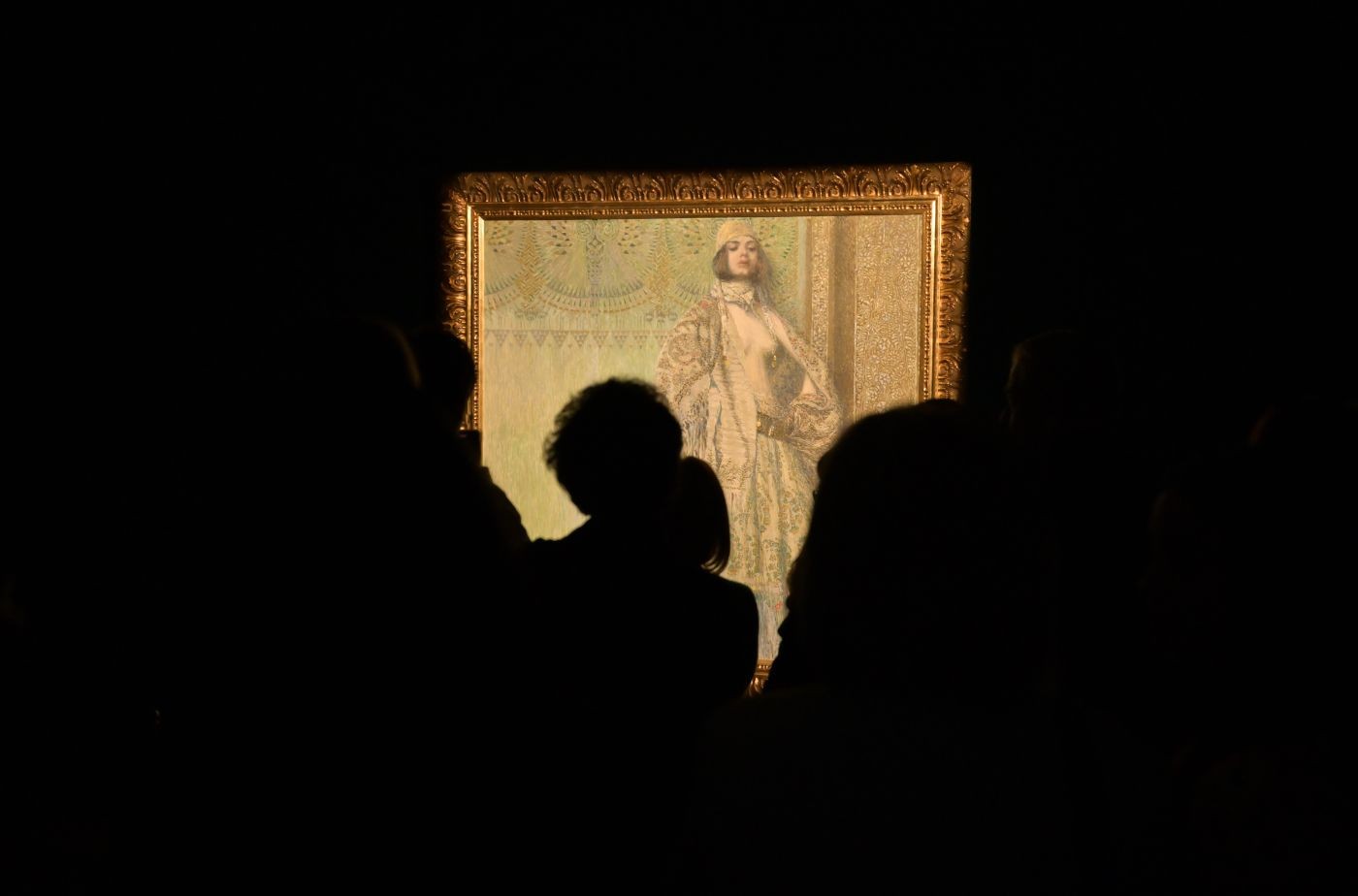
You will learn about these and many other fascinating details when you visit the National Gallery of Armenia.
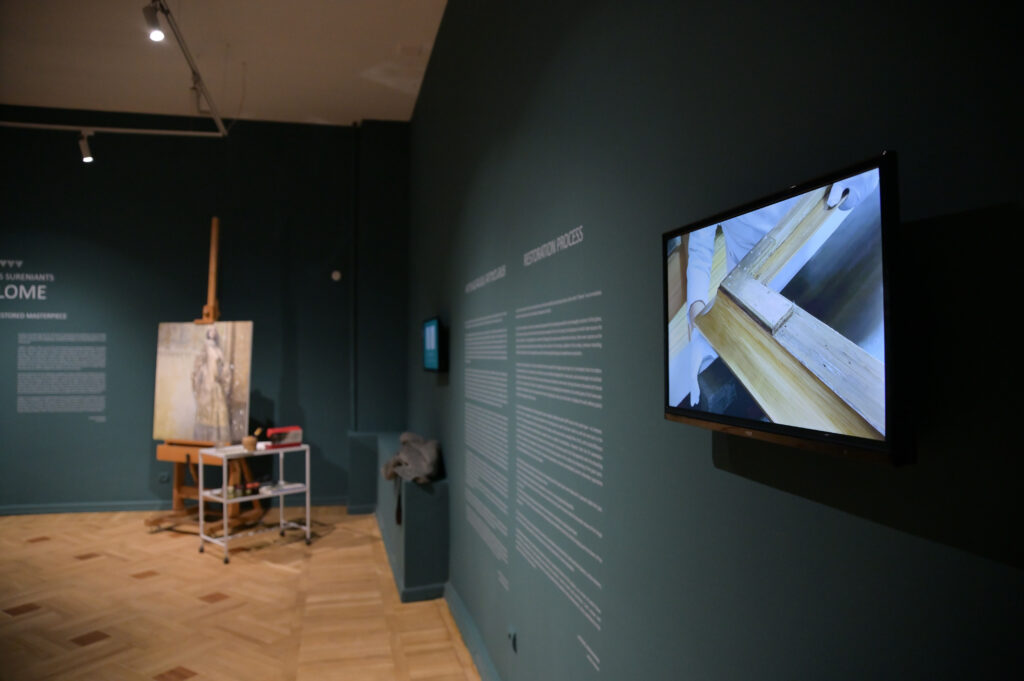
Displayed beside the restored canvas are a documentary video summarizing the lengthy restoration process, as well as working photographs accompanied by explanatory texts.
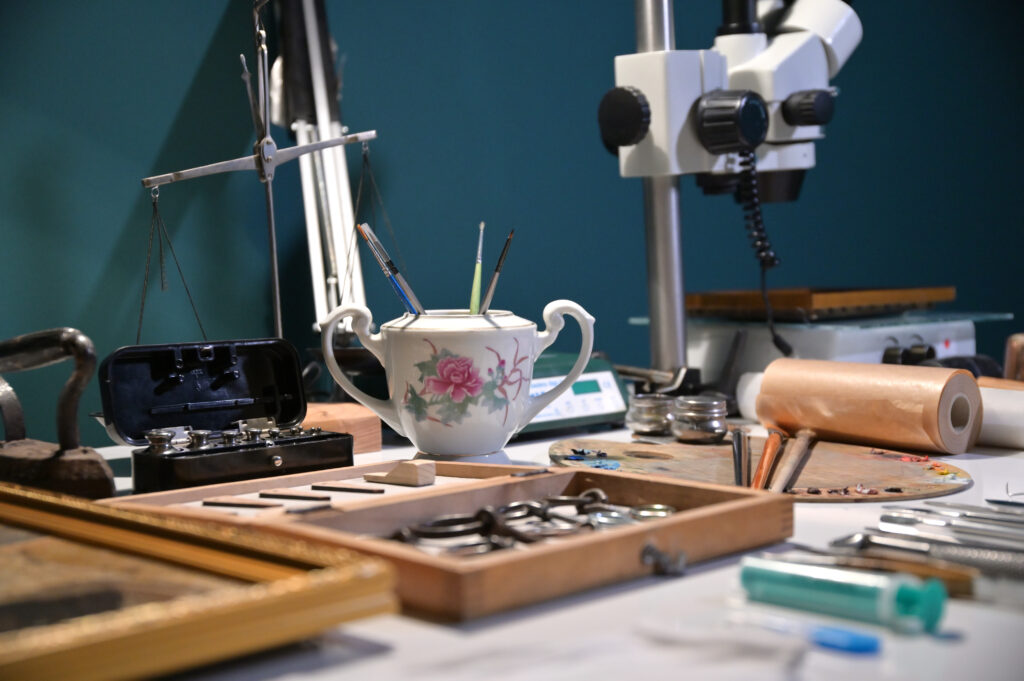
The first exhibition hall recreates a corner of a restoration workshop, featuring a worktable with appropriate tools and materials, an easel, and other equipment. Among the most interesting exhibits in this section are a microscope and an ultraviolet lamp, allowing visitors to independently examine the restored areas of the painting, retouching interventions, and other conservation work.
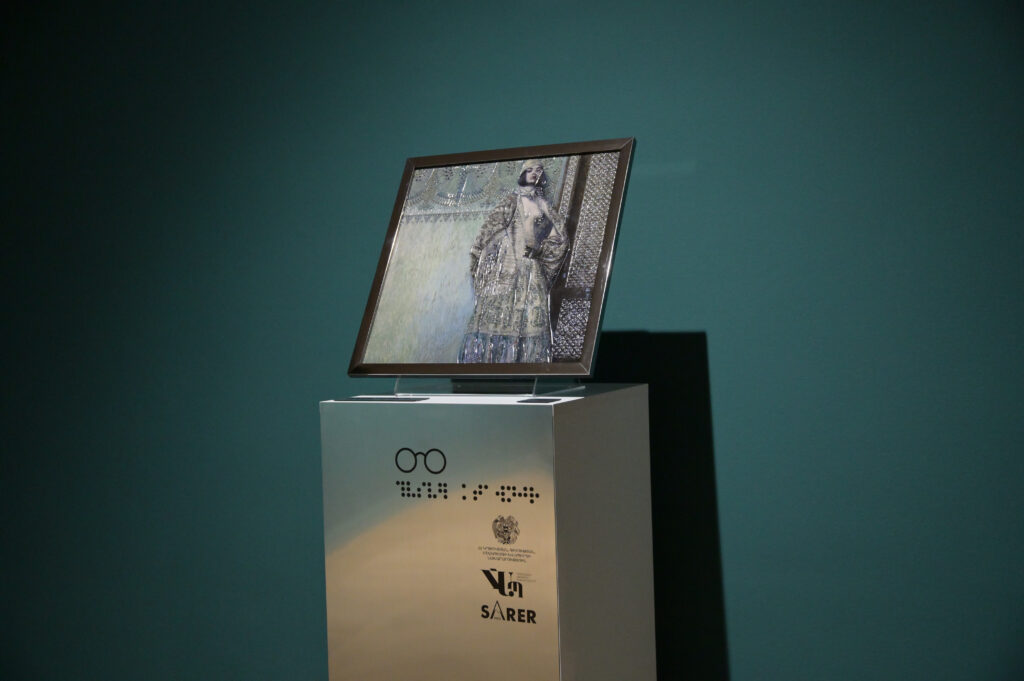
The exhibition also features a tactile replica of Salome, specially created for visitors with visual impairments.
This article was prepared based on the works and research of specialists from the National Gallery of Armenia.