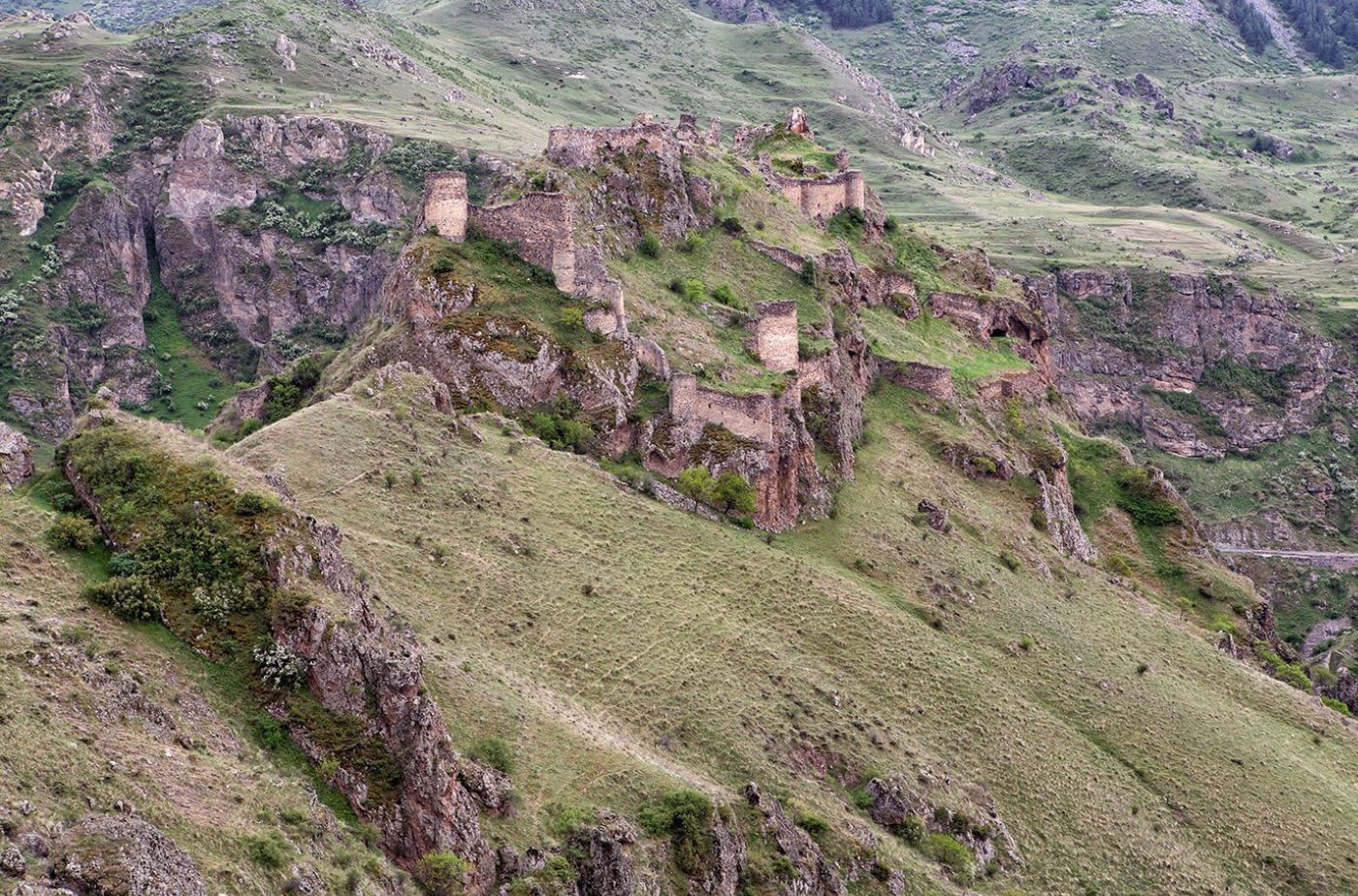

Tmbkaberd is a large, though poorly preserved fortress in the Aspindza region, a few kilometers from Vardzia. It stands on a high cliff on the left bank of the Kura River and is clearly visible from the highway, but reaching it is not easy, so the entire flow of tourists usually passes by. Climbing up here is exhausting, especially in summer under the scorching sun. But the views from there…
I reached Tmbkaberd by hiking, covering a distance of about 3.5 km. Yes, yes, the very same Tmbkaberd about which Hovhannes Tumanyan wrote a poem. Based on that poem, the Russian poet Sofia Parnok wrote its libretto, and Alexander Spendiaryan composed the opera “Almast.”
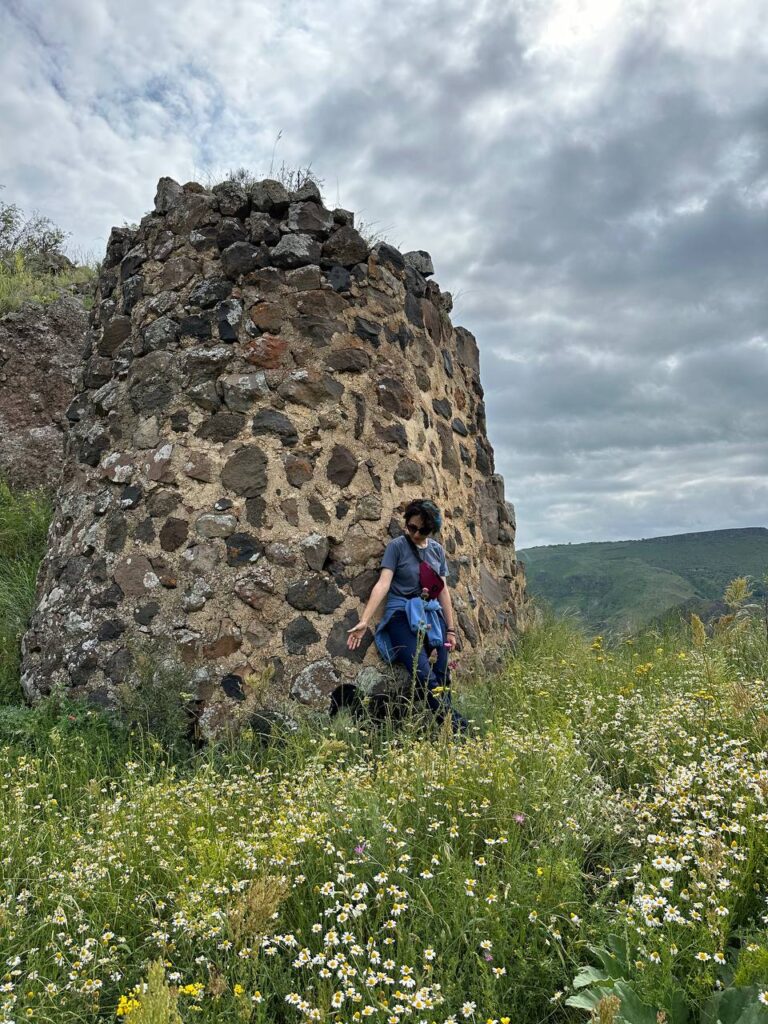
Castles have long been a source of inspiration for writers, artists, and dreamers. From the Gothic castles that inspired works such as Mary Shelley’s Frankenstein to the romantic fortresses that captured the imagination of Alexandre Dumas, these strongholds have fueled countless works of literature and art.
Tmbkaberd, Tmuk, Tmbuk, or Tmogvi, is a medieval fortress located in the Upper Javakhk district of the Gugark province of Greater Armenia, on the left bank of the Kura River. Today, it is situated in the Aspindza district of the Samtskhe-Javakheti region of Georgia.
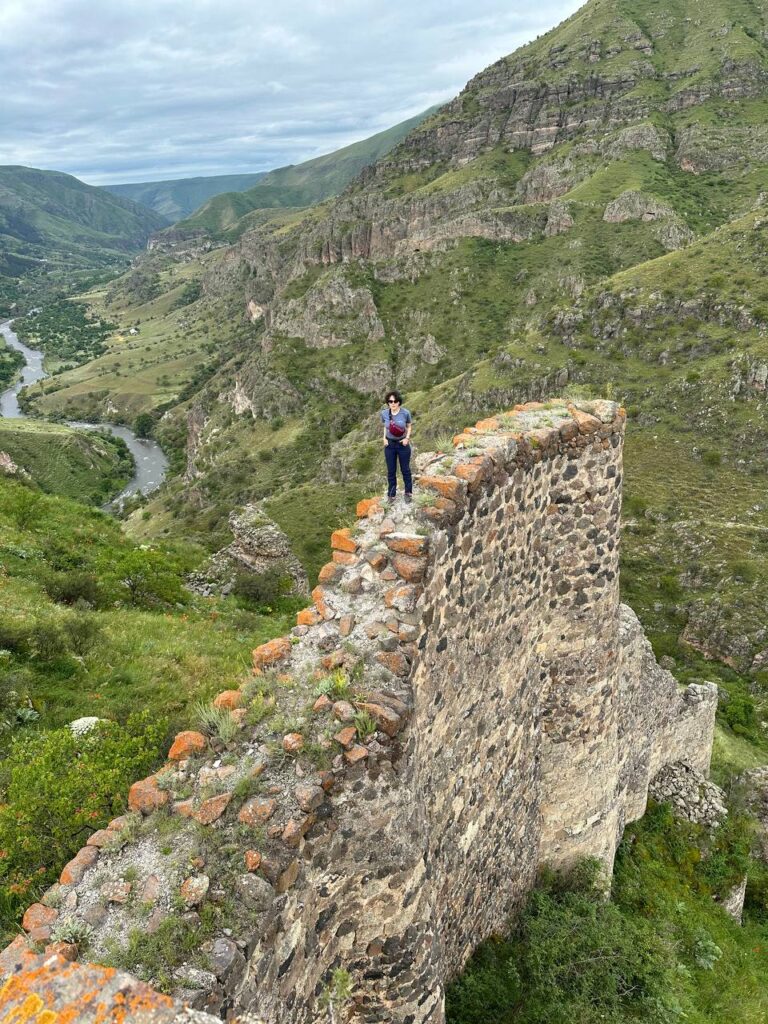
When I first heard that there was a passage leading from the fortress down to the river, I did not believe it. The height there seems completely unreal. But the rumors proved true—the secret passage really exists and is almost vertical. An earthquake severely damaged it, yet speleologists have managed to pass through individual sections. One can only wonder how it was used in the past when there was no climbing equipment.
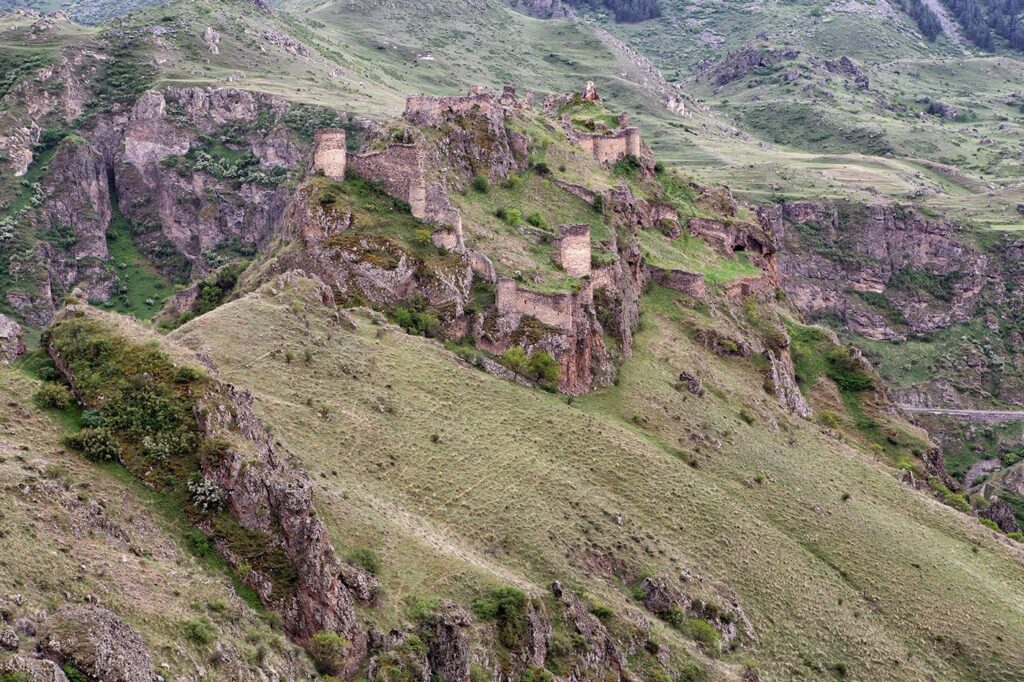
The fortress stood on three elevated hills and measured approximately 150 meters in length and 30 meters in width. It was surrounded by walls and towers built separately on each of the three hills. The walls and towers were constructed from finely cut stone and lime mortar and had a thickness of about 1.5 meters.
Tmbkaberd is first mentioned in 10th-century sources. It controlled trade routes that connected the region of Javakhk with Western Asia. In the 10th century, Arab invaders attempted to capture the fortress but failed.
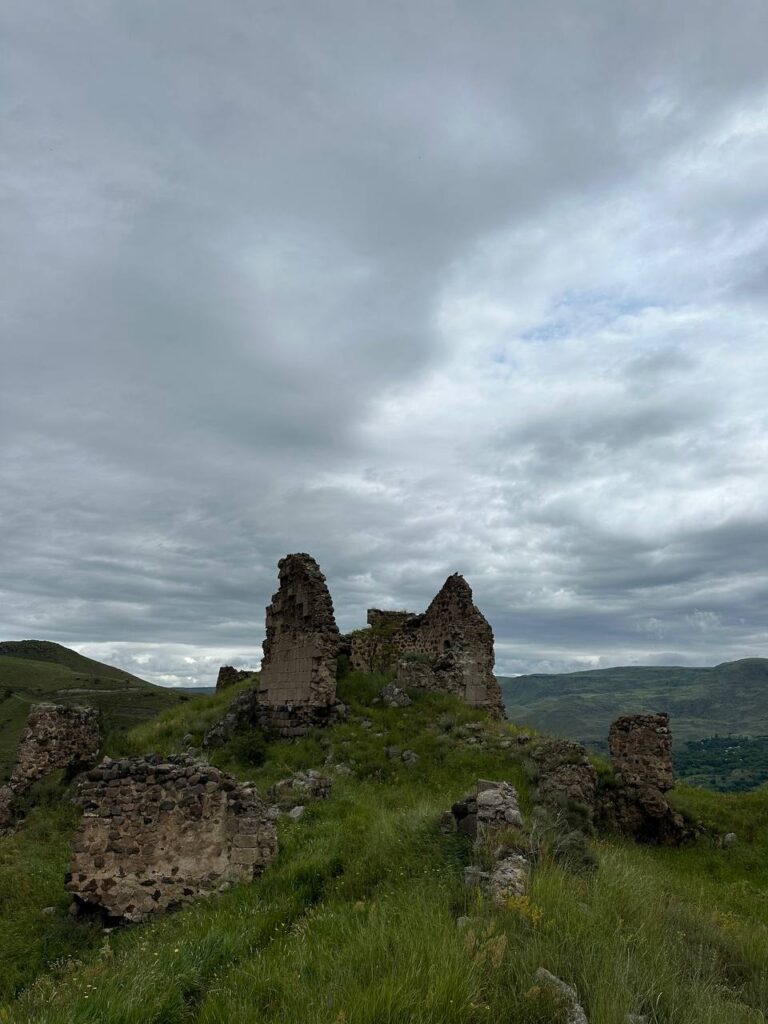
Today, castles stand as enduring symbols of strength and architectural brilliance. They rise from the earth like ancient guardians, their towers reaching toward the sky and their walls whispering stories from centuries past.
At first glance, castles seem to have been built solely to withstand the ravages of time and the assaults of enemies. Yet, upon closer inspection, one discovers profound artistry carved into every stone. Rock and mortar were transformed into works of art that have survived for centuries.
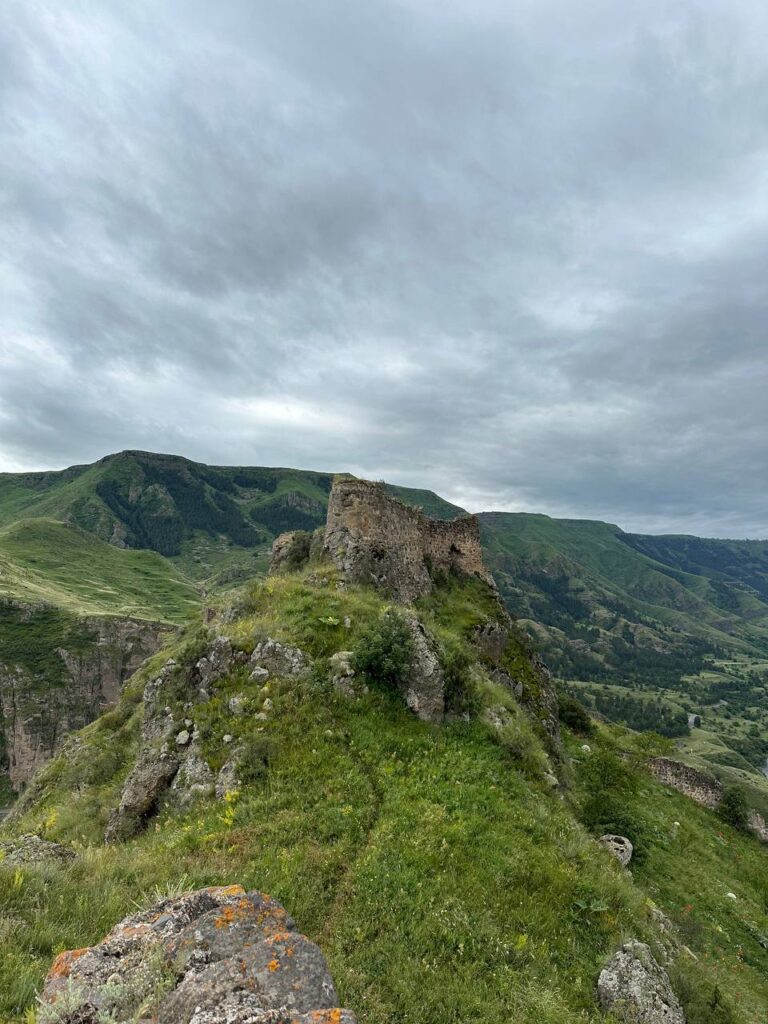
In my imagination, I stepped back into that reality. I tried to picture what the fortress must have looked like in its time. The appearance of a castle is often a breathtaking display of architectural ingenuity. Massive stone walls, sometimes adorned with intricate carvings, protect the heart of the fortress. Battlements, arrow slits, and towers create a formidable silhouette against the horizon. Every element serves its purpose, combining practicality with aesthetic beauty. The defensive walls, once designed for protection, now stand as vantage points from which one can admire magnificent landscapes.
Tmbkaberd had three gates: southern, northern, and eastern. On a separate lower hill, the southern and eastern walls of a chapel have survived. These walls once featured depictions of the Holy Mother of God, two virgins, and two apostles. Beneath the arch on the lower part of the southern wall, the image of a saint can still be seen. Near the southern gate, an underground passage descends through the rock toward the Kura River. In front of one of the hills stands a 4.5-meter-high monument, around which the ruins of houses can be found.
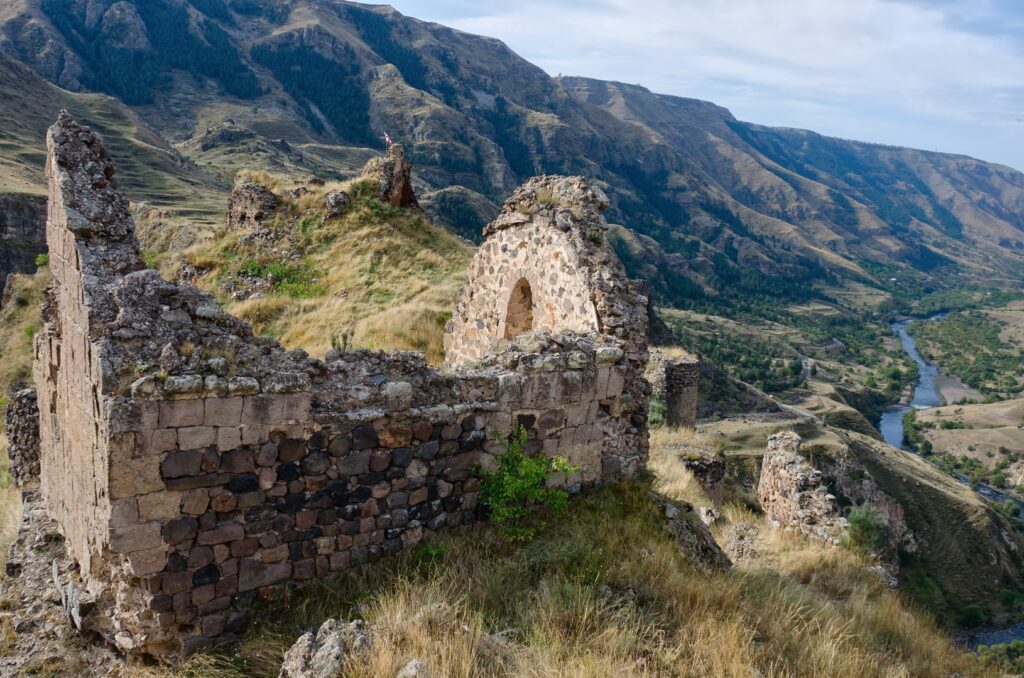
Nearby lies the village of Tmbuk (Tmogvi), whose cemetery contains numerous tombstones and cross-stones with Armenian inscriptions. One of the khachkars bears the date PKZ (1417 AD). In addition, a burial mound dating back to the 3rd–2nd millennia BC has been discovered near the fortress. Ruined house walls can also be seen opposite the fortress, on the right bank of the Kura River.
Կավագործությունը հնագույն արհեստ է։ Պարզվում է, որ ոչ
Մի պահ կսարսափես, հետո կհիանաս աշխատանքներով։ Դու սարս