Close to the Mountains: Khustup
Whenever I set off on a journey, there are several things I make clear to myself before I begin, and my trip to Khustup was no exception. Perhaps that was the reason why my journey simultaneously ended and began halfway through. To keep it brief, I joined another group of hikers.
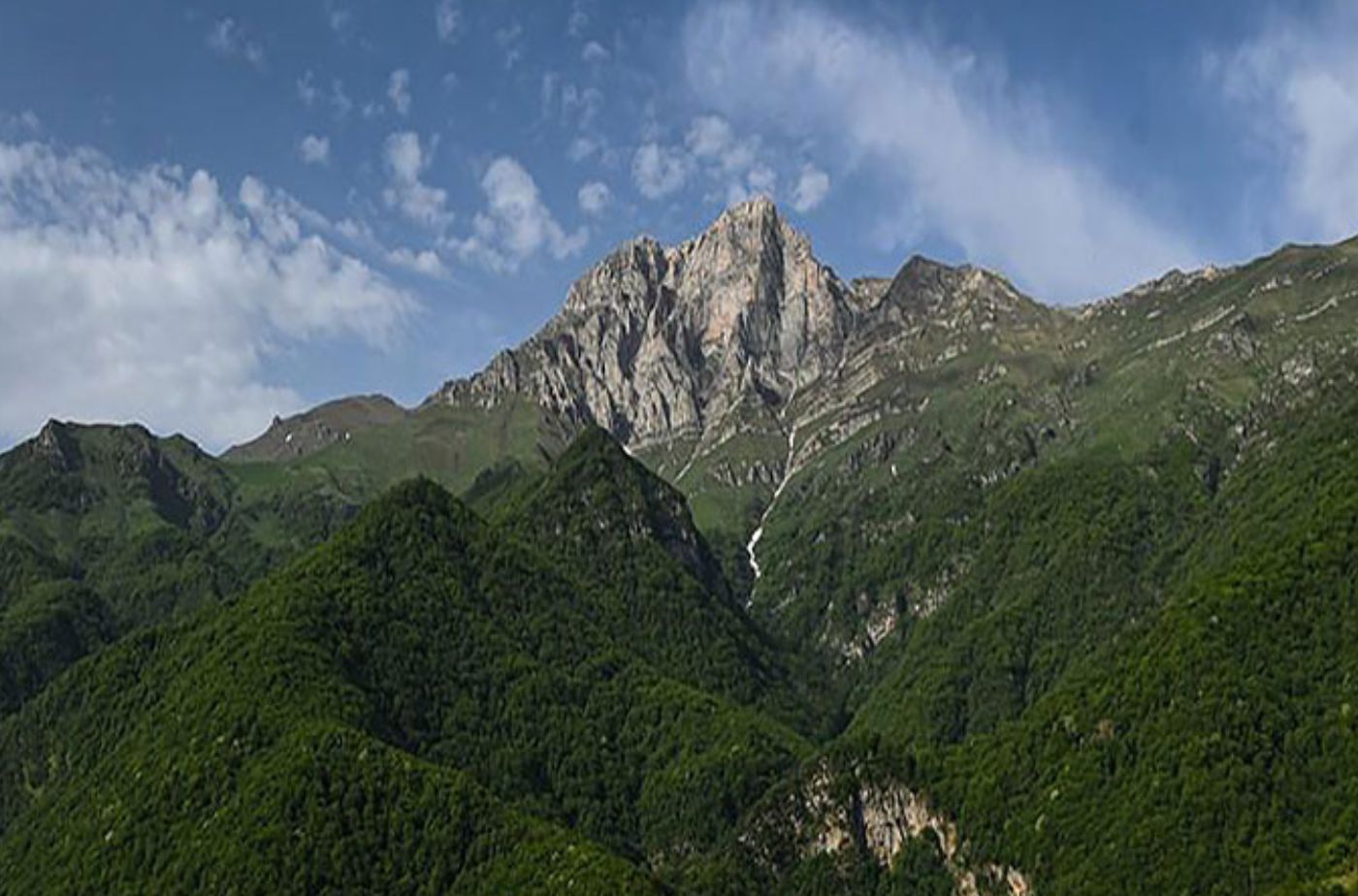
The first day’s stop was Verin Vachagan. When we arrived, it was already late at night. It was only in the morning that I realized where we were. Nature woke me up and had prepared a surprise — Khustup, appearing from another horizon, magnificent and sublime.
I can now confidently say that traveling has made me brave. In order to discover a new place, I am ready to sacrifice comfort and peace, and I am also ready for any challenge, because ahead, as a reward for victory, an unreal landscape awaits to be discovered.
I returned from Khustup almost a week ago, but I am still under its influence. The impressions are still so vivid, colorful, and new. We spent the night in a tent, and it was clear that the basic facilities needed to take care of our natural needs were absent. I felt like an ancient human; all I was missing was the first tool — a chisel, a piece of stone sharpened at three ends. Taking care of natural needs under the open sky had caused a deep sense of embarrassment on the first day. It was like entering a dark forest, when your eyes gradually adjust to the darkness and the brave, experienced, and all-powerful forest explorer within you awakens. At times, it even felt like being a male four-legged animal, “marking” territories for the sake of tomorrow’s prosperity and abundance.
They say Khustup is considered a sacred mountain, and people have given it the name of a hermit. According to one of the etymologies of the mountain’s name, it is rooted in the Hurrian word khutu, meaning prayer. Since ancient times, the mountain has been a place of prayer and pilgrimage. On the slopes of Khustup, near a spring called Kozni, lie the remains of Garegin Nzhdeh, a military commander of the Armenian people.
We were supposed to begin our ascent of Khustup from the mountainous settlement of Navcha, where we set up our tent camp, made a fire, gathered in a circle around the campfire, and under its dim light I began watching the hikers. They were impatient, and we were waiting for the next day’s ascent.
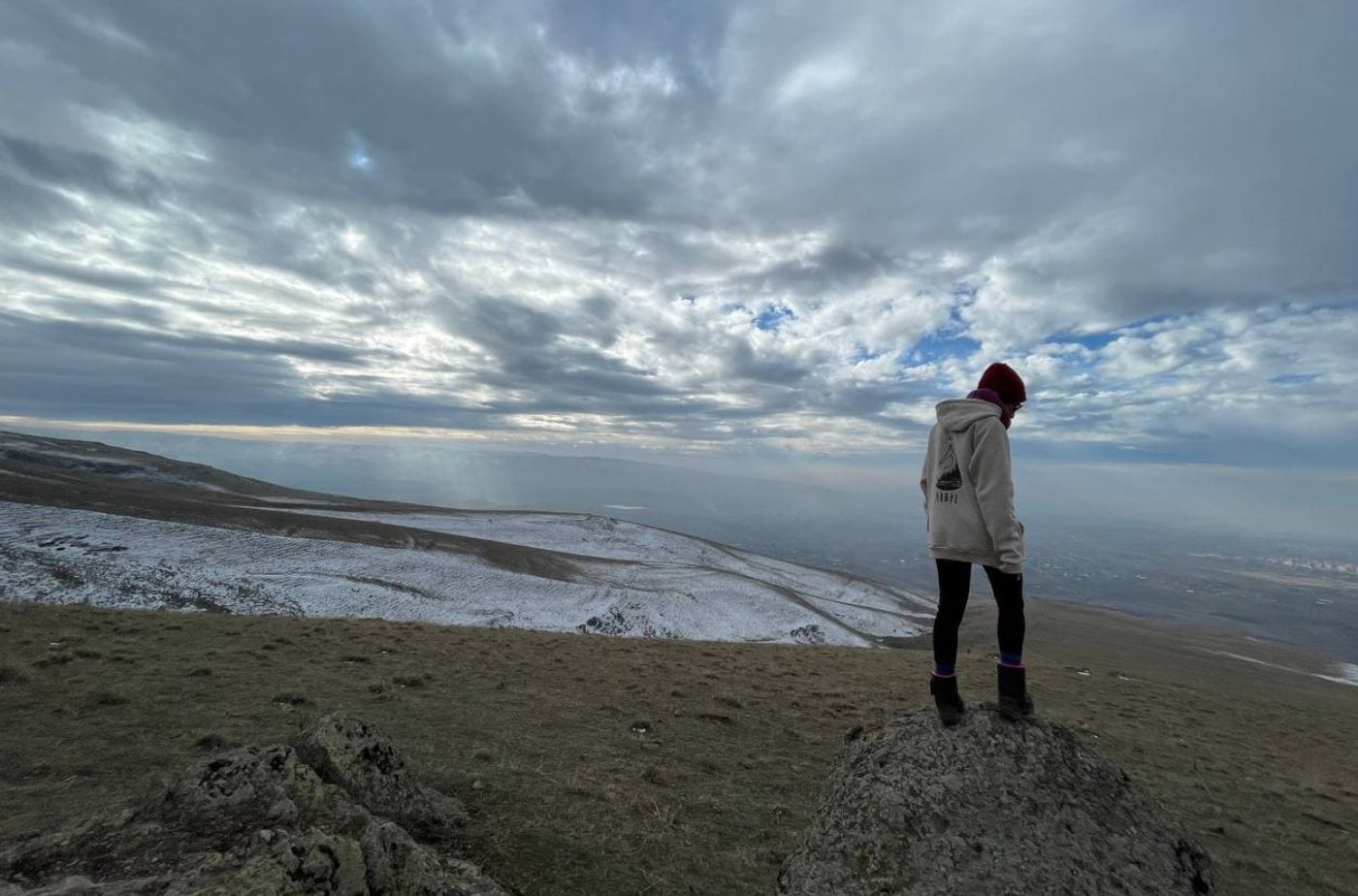
Only four hours after setting off from the foot of the mountain did we reach the final hill, after which all that remained was to conquer the summit. The beauty of the summit opening up before us took our breath away. It was difficult to tear my eyes away from the magnificent view, but we had to keep moving, towards the summit.
I noticed the uniqueness of the Syunik Mountains — proud and impregnable, rising majestically in the distance in rows like warriors, splendid and filled with a sense of pride, watching us and our every movement. What an enormous and immense reservoir of human stories they carry within themselves. How many people like us have they welcomed, listened to their stories, and silently seen them off, free of arrogance.
Wild UP․ Syunik |
Each of them is filled with its own color. You instinctively want to photograph them, but you realize that it is impossible to capture all of their beauty in a single frame.
As I walked, I realized that mountains do not like arrogance. Until then, I had been living in a world that was comfortable for me, and it seemed that I could dictate the rules and make my time there easier. The feeling of bitterness was not long in coming.
In the world of mountains, we are an insignificant, tiny mass, and if you close your eyes for a moment and sharpen your hearing, you will notice the parallel life existing alongside you: the diligent work of insects, the orderly flight of birds, and the harmonious, sometimes almost combative, clashes and conversations between the wind and vegetation.
And at the moment when you feel that the source of strength needed to move forward has run dry, you have to listen to the call of the mountains. They will push you forward firmly, but not harshly, making you understand that in life, if you have a goal, you need to make an effort.
It turns out that nature is not only inspiring, but also a teacher.
The expression “to be blinded by beauty” can only truly be understood in Khustup. We were guests of the mountain, and it was hospitable. It began to enchant and captivate us. From the various exclamations of admiration, I realized that what I was seeing was not a vision, but reality. The clouds had surrounded us like lively young men. The emotions were so vividly etched onto our faces that nature itself seemed to rejoice with us. With the delicacy of silk, the white clouds moved even closer to us, and the view became covered in a fine veil.
I do not know how else to convey to you even a piece of Khustup’s magnificence. Again and again, I choose colors and shades in my mind, but it is useless. This is one of those places that are spoken of in silence — by feeling.