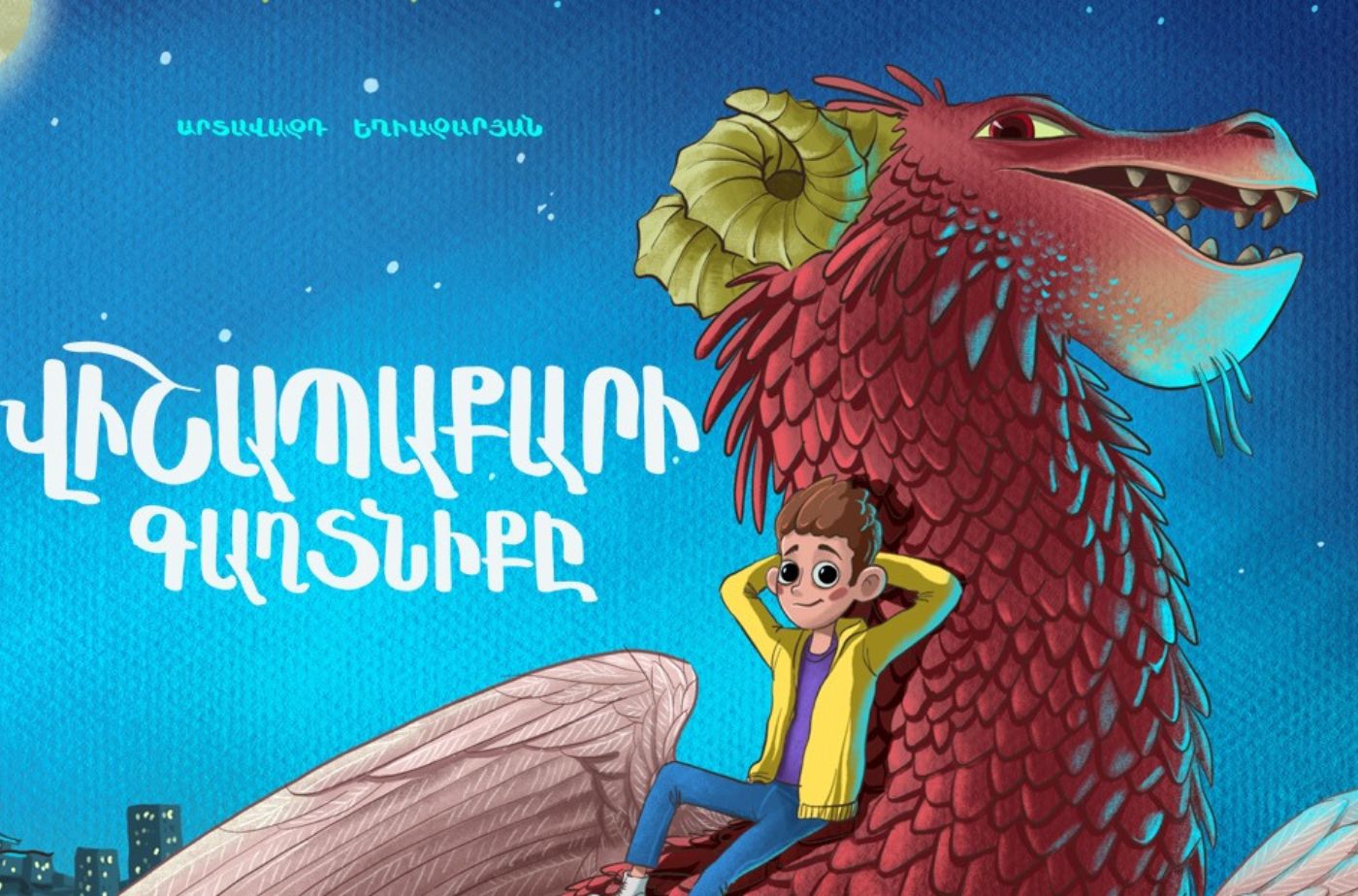

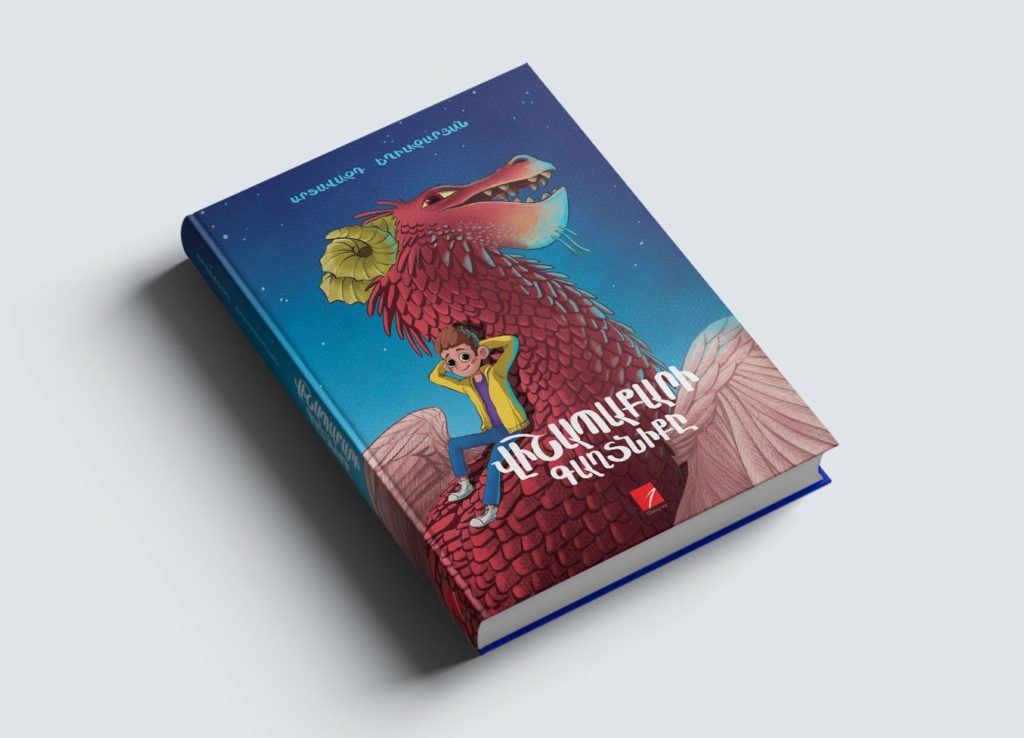
Vahagn’s 13th birthday began disastrously: a clash at school, a stupid situation, Astghik the girl of his dreams doesn’t even look his way, and his parents are constantly busy… Instead, on that very day, Vahagn had to help bring back to life an ancient, not quite mythical creature, one he would first fear and then befriend. But dragons, as it would later become clear, are not particularly well-disposed toward humans…
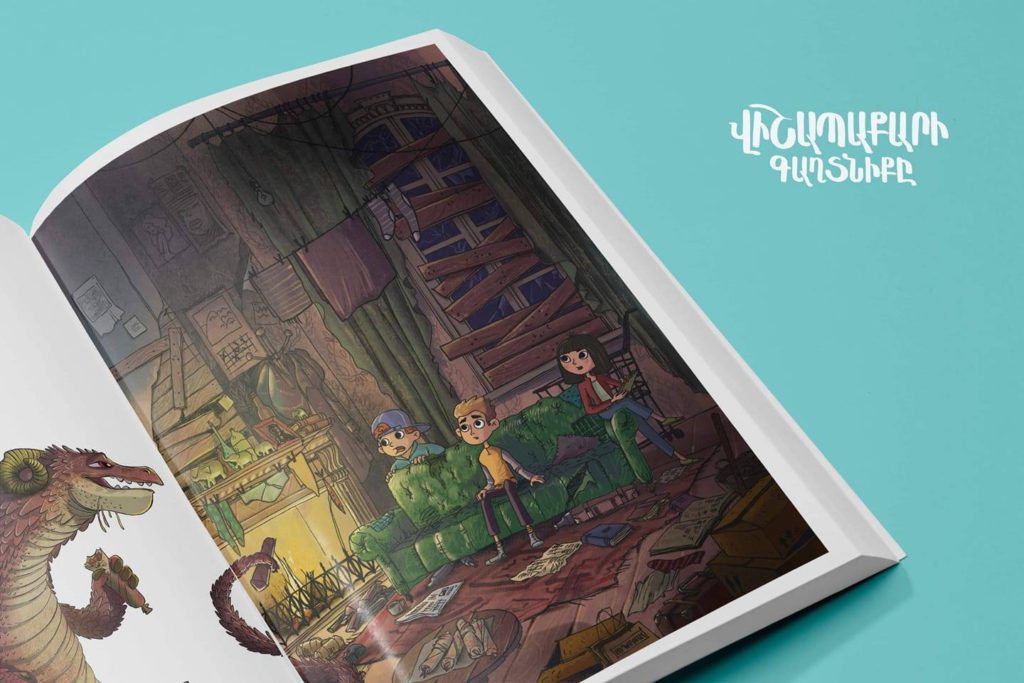
Dragon Stones are unique phenomena found only within the territory of historical Armenia. A mystery that still has no clear explanation.
It is a pleasure to encounter contemporary Armenian literature that will first mentally, and then in reality, make many people travel around Armenia. This young adult fantasy book is seasoned with mythology and adventure, and its events take place in Armenia. By no means do you have to be a child to read it I myself read it in one sitting. If you are not familiar with it, I recommend it, and before that, I present my conversation with the book’s author, Artavazd Yeghiazaryan.
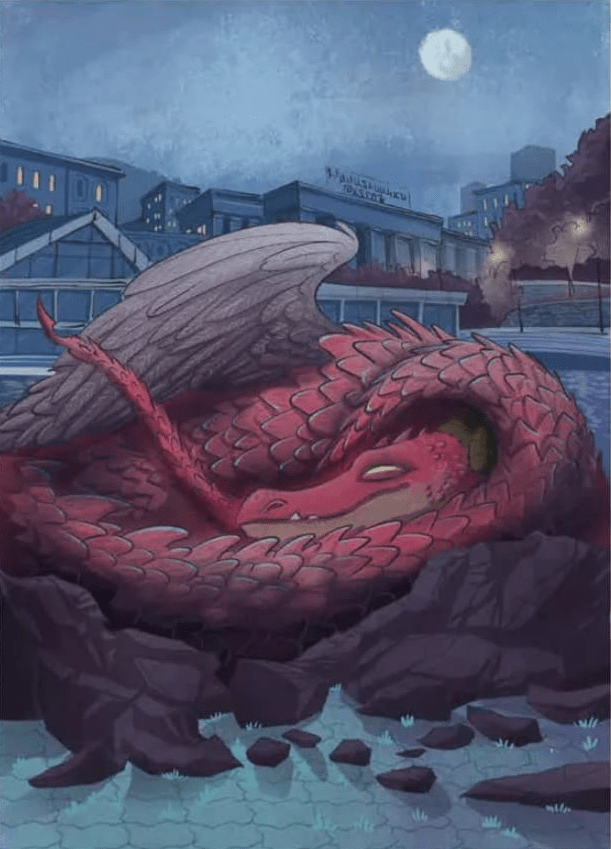
Shaking off the remains of stone fragments from himself (a few splashed into the pond), directly in front of Vahagn, where the Dragon Stone had once stood the dragon folded its hind legs like a dog, stretched out its two front paws, and sat down. Paying no attention to Vahagn, the monster swayed the head perched on its half-meter-long neck, the most striking features of which were its ram-like spiral horns and the section of its neck covered with sharp snake-like protrusions. A moment later, its wings opened behind its back with a creaking sound.
According to some researchers, the Dragon was originally worshipped as a spirit that bestowed water, rain, and wealth, dragging its tail across the earth to mark the routes where canals should be dug. The Dragon was also regarded as a fearsome monster guarding the sources of water and hidden treasures.
There is very little young adult literature in Armenia. I took it upon myself to revitalize that field. My son is at the age of reading books. I realized that he would only be reading translations of foreign literature. Stories set in a familiar environment, with characters recognizable to him, simply do not exist. Of course, we have Vakhtang Ananyan and Azat Shahinyan, whose works have not been republished for a long time, while a love for reading should be instilled in children from an early age.
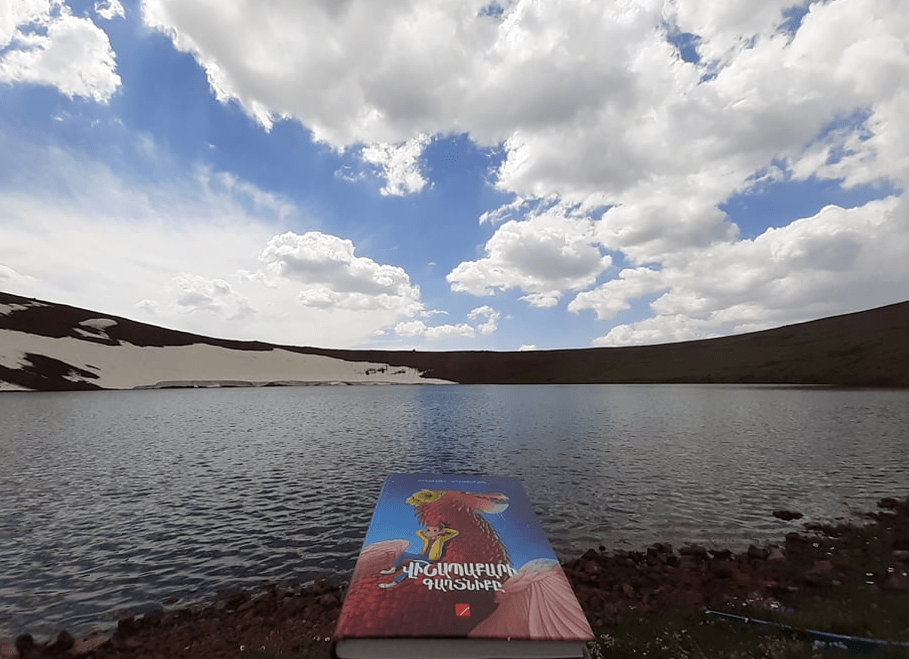
In our culture, we have a very interesting element—the Dragon Stone. A mysterious phenomenon; there are many of them in Armenia, and nothing is known about them. Our folklore is rather lacking in magical phenomena; in the epic, one can only notice people. It was time to “awaken” them. In international literature and cinema, we have successful examples where historical epic elements and reality walk side by side.
I personally love the Dragon Stone in Poplavok Park. My childhood was spent there. It lay on the ground, and sitting on it and playing “Red Button” at night was already a familiar experience.
Vahagn’s 13th birthday began disastrously: a clash at school, a stupid situation, Astghik—the girl of his dreams—doesn’t even look his way, and his parents are constantly busy… Instead, on that very day, Vahagn had to help bring back to life an ancient, not quite mythical creature, one he would first fear and then befriend. But dragons, as it would later become clear, are not particularly well-disposed toward humans…
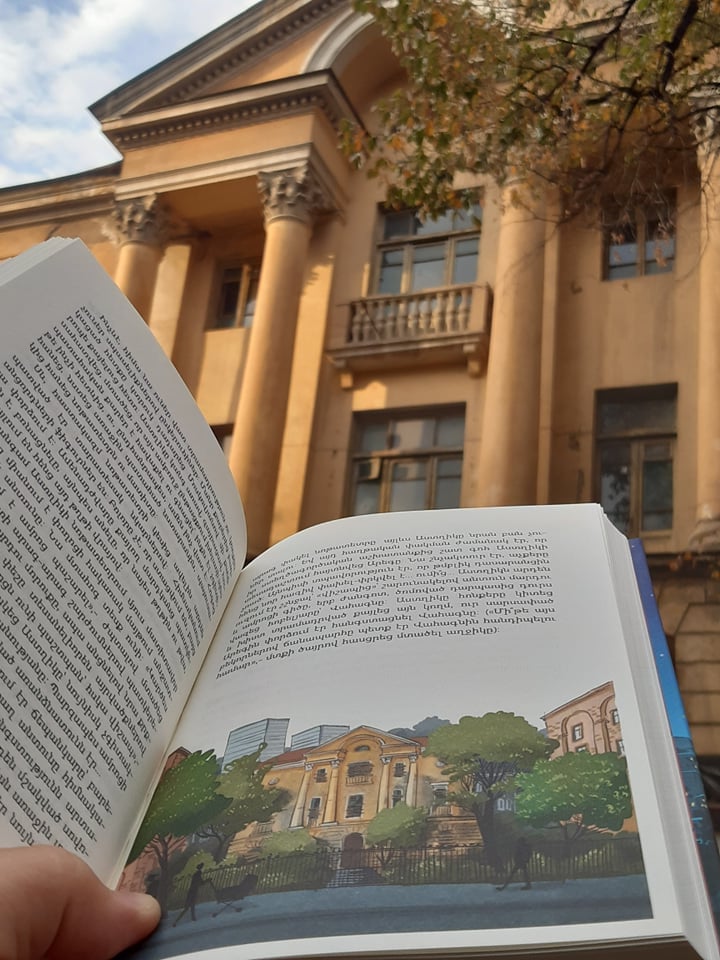
In the book, you will notice a very interesting contrast. Familiar places, characters brought from a magical world. A dragon turned into stone, rabiz music, shawarma, familiar everyday spoken language.
What surprised children the most was that the events of the book are about the reality they know. And the language is very important, when writing about 21st-century Yerevan and its characters, the speech must be appropriate. Language is a flexible, living organism that did not remain in the 19th century.
Unity, loyalty, friendship. A common danger can unite different people. Communication between two unfamiliar groups, and also the idea that help can come from the most unexpected direction.
The book was published during the days of the war. One parent bought it for their child, but ended up reading it themselves to distract from reality. They wrote in a comment that there is a great conflict in the book, and that it was not resolved but frozen, left for later times. And now, it explodes upon other generations. It is the same in the book: thousands of years ago, people fought the dragons and turned them into stone, setting aside the solution to the problem, and today that issue has arisen again. In reality, the most important thing was not even to convey a message, but to tell an interesting story.
The children once asked:
“Are there really dragons?”
I answered that I have not met any yet, but maybe there are.
I thought that the positive character, Vazgen, would be the Dragon Stone of Poplavok, and I needed a villain, who is located on Mount Azhdahak. An epic dragon, who was supposedly once a king. It was important to me that just as Yerevan is real, so too are the places through which the heroes travel.
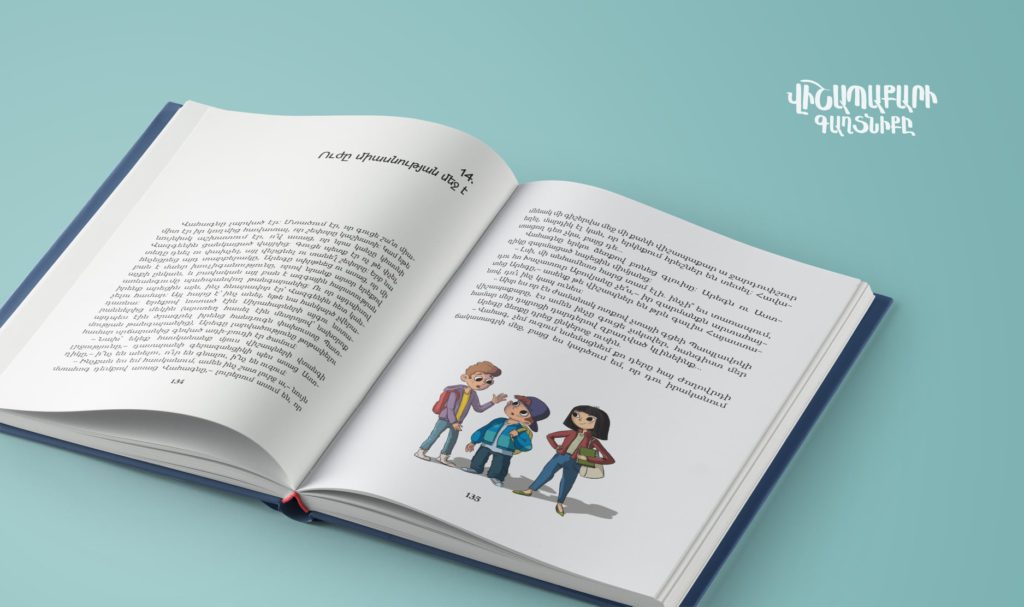
One of my vivid childhood memories is that all the books in the Adventure Library series had beautiful illustrations that complemented the narrative.
There are many excellent artists in Armenia who work on book illustrations. I met Harut Tumanyan, and we began working together. As a result, the book is also notable for its illustrations.
There will definitely be a continuation, because when an alternative reality or new worlds are created, it is difficult to limit yourself to just one book. I want to turn The Secret of the Dragon Stone into a trilogy. At the moment, I am working on the second book. Progress is a little slow at the moment, but it features the same characters—they have simply grown older.
Azhdahak is the evil dragon of Iranian mythology—Aži Dahāka. Aži means viper, snake, dragon, against whom the storm god Thraetaona fights. In the Shahnameh, Aži Dahāka appears as a foreign tyrant king named Zahhak, against whom Fereydun fights, defeats, and chains him. In the ancient Armenian epic, this mythical dragon Aži Dahāka became the king of Marastan, whom Tigran defeats and kills.
Photos from the book’s Facebook page.
Այդ նախագծում մեզ հաջողվեց անել այն առավելագույնը, ինչ
