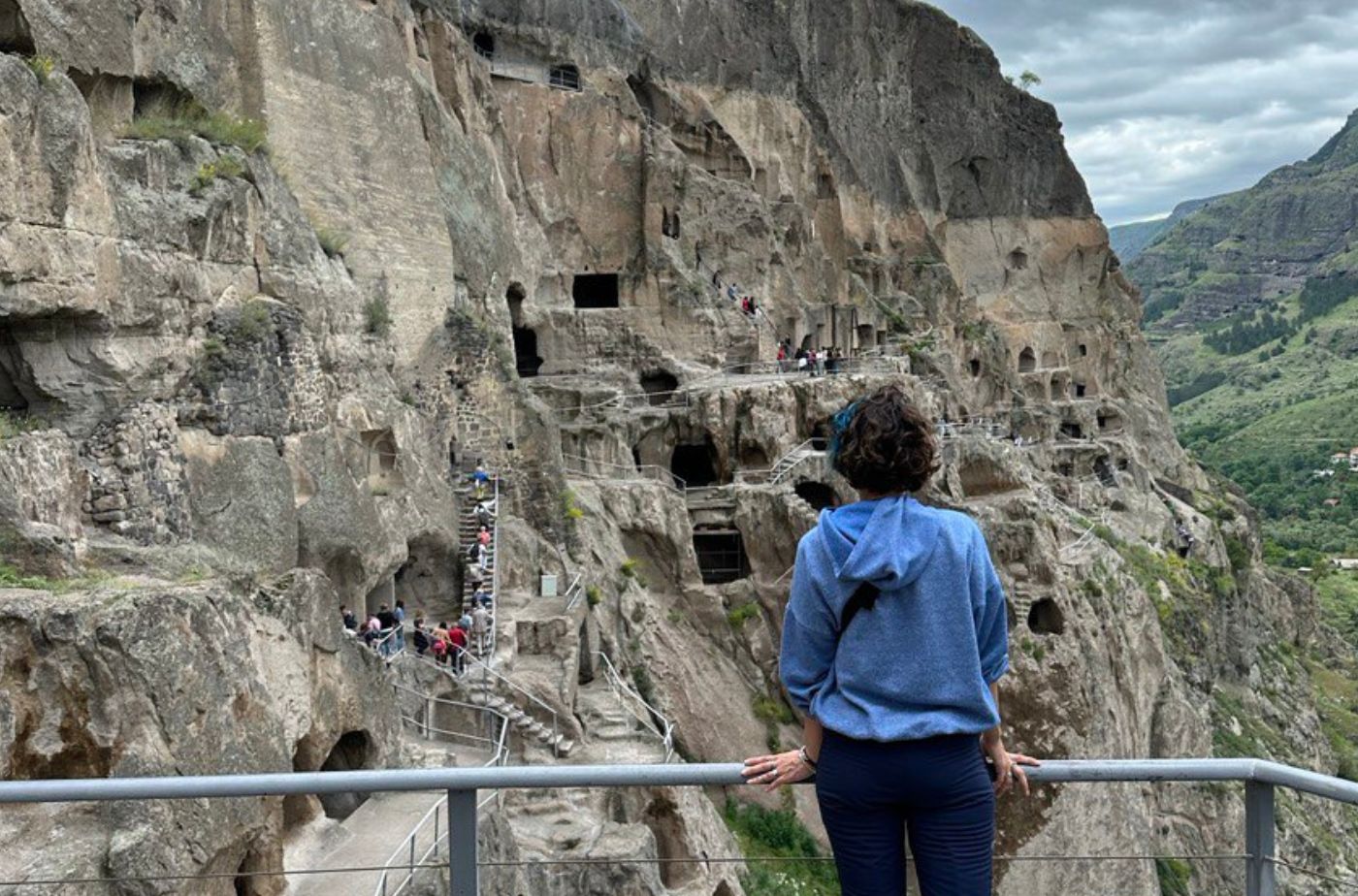

In Javakheti, Georgia, embraced by the ancient ruggedness of nature, the earth whispers the secrets of centuries past. The cave city of Vardzia, which I am about to tell you about, is a captivating creation born of human effort and nature alike. It is as if history itself carved this wonder into the heart of the landscape, where every fractured rock tells a story of the resilience and creativity of civilization.
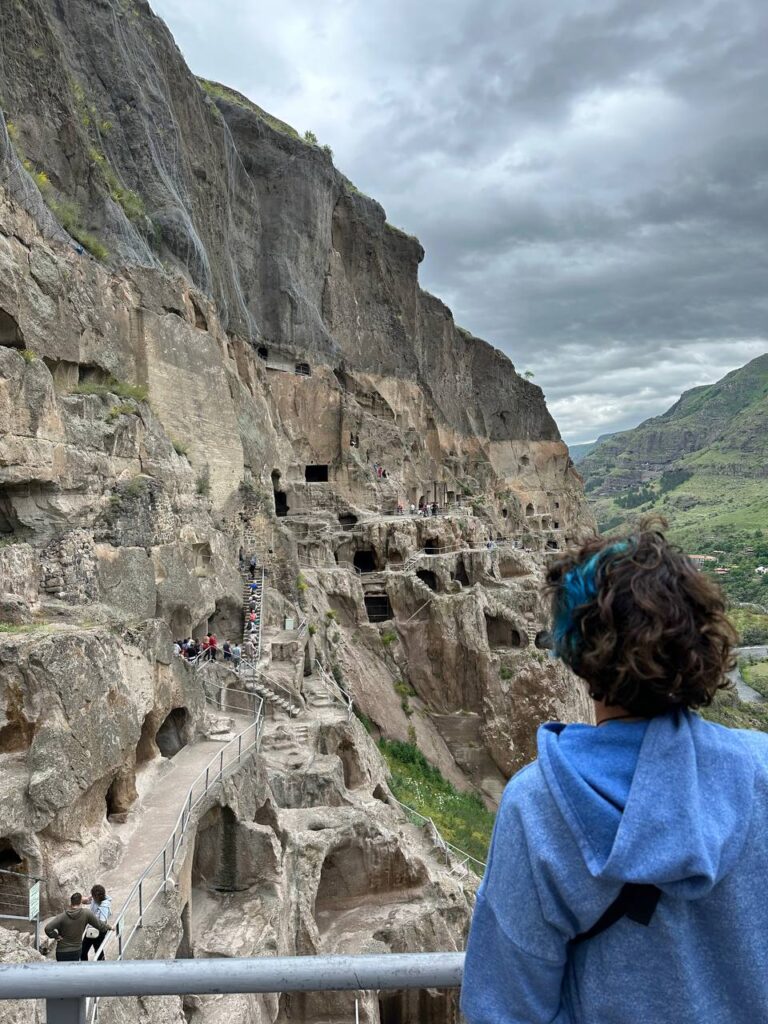
Founded in the 12th century, the cave city of Vardzia is one of Georgia’s most important and impressive historical monuments.
Vardzia emerges from the cliffs like a dream woven into the very fabric of the earth.
Upon closer inspection, the caves reveal their secrets. Some are dwellings where generations found shelter and sanctuary. Others are chapels adorned with delicate frescoes, where prayers still seem to linger in the air, whispering through time, and where an indescribable atmosphere connects the present to distant echoes of faith. Interwoven tunnels and stairways create a sense of mystery, inviting visitors to unravel the puzzle of Vardzia’s labyrinthine layout.
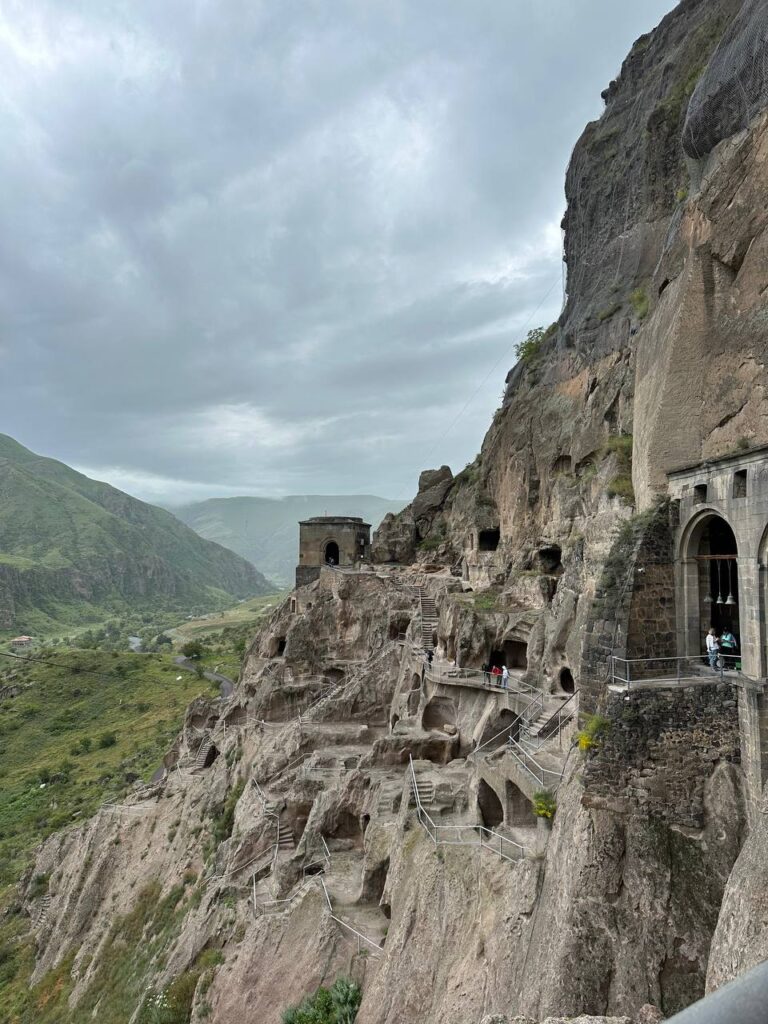
This underground kingdom was carved into soft volcanic tuff cliffs. Its mother is Mount Erusheti. The city stands at an elevation of 1,300 meters above sea level. This enormous project began nine centuries ago under King George III and was later continued by his successor, the more widely known Queen Tamar. Such a monumental undertaking was not merely an act of ambition—it was intended to serve as a refuge in the event of enemy invasions. The caves of Vardzia could shelter up to twenty thousand people. Just imagine: thirteen, or in some sections eight, levels interconnected by a complex system of passages and corridors.
Queen Tamar herself spent time in Vardzia, praying there as she sent her husband to battle against the Seljuks, from which he returned victorious.
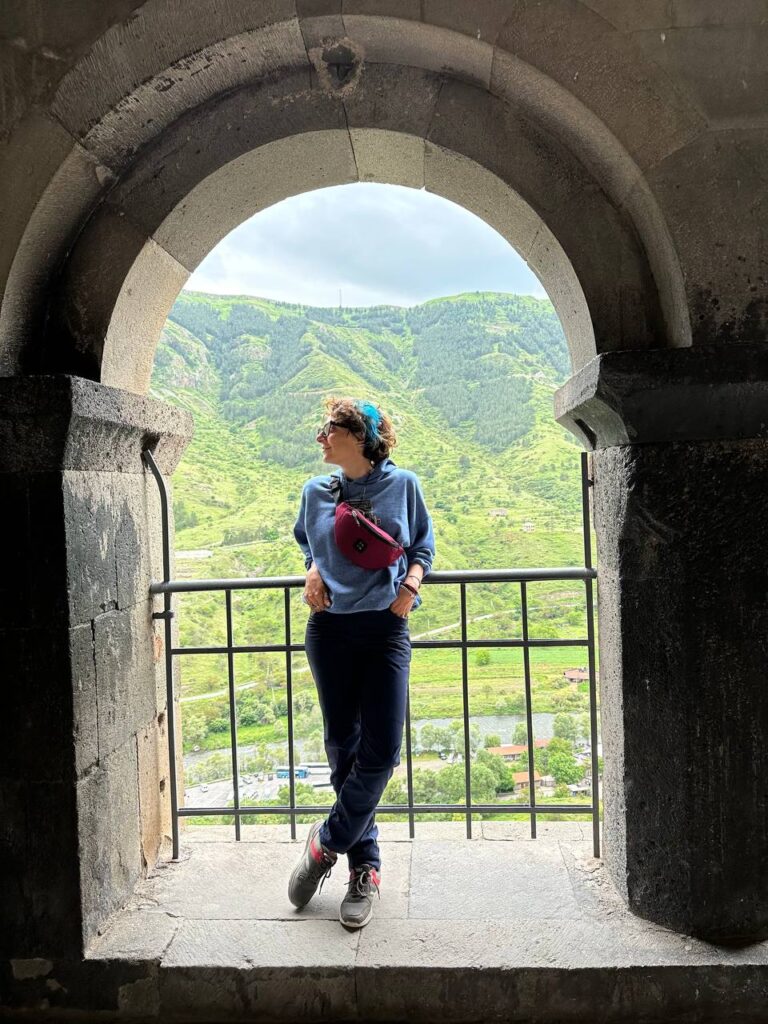
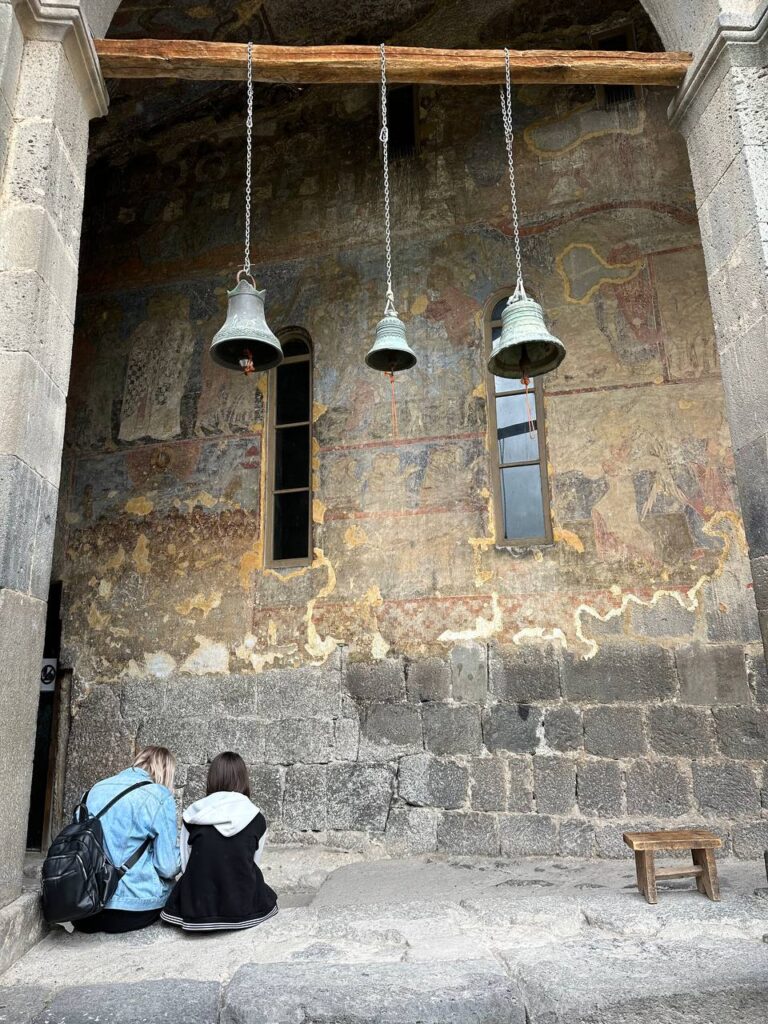
At the height of its prosperity, Vardzia was an “invisible city.” What is visible today from the banks of the Kura River was once hidden behind the outer rock face, which later collapsed during a powerful earthquake in 1283, exposing the city’s interior. At the center of the monastic complex stands the main church dedicated to the Holy Mother of God. The walls bear paintings, including portraits of King George III and Queen Tamar created in the 1180s.
The tourist route through Vardzia is well-equipped and relatively safe, featuring protective barriers, railings, and handrails. Nevertheless, there are sections where you will truly understand what it means to “walk on the edge of an abyss.” Do not leave the designated route the nearest hospital is quite far away 🙂
From Akhalkalaki, buses depart four times a day: the first at 10:30 a.m., followed by departures at 12:20 p.m., 4:00 p.m., and the last one at 5:30 p.m.
It is best to take the first minibus, as there are usually many passengers. Arrive early and secure your seat in advance. Departure times may change, and buses can sometimes be delayed, so be sure to check all details at the bus station before your trip.
The ticket price ranges from 6 to 10 GEL.
In the opposite direction, the last bus departs at 3:00 p.m.
The Vardzia Cave City is open every day, seven days a week, from 10:00 a.m. to 7:00 p.m.
The entrance fee is 15 GEL.
Մի պահ կսարսափես, հետո կհիանաս աշխատանքներով։ Դու սարս
Լեռնագնացությունն առաջին հերթին աշխատանք է, երկար ու հ