
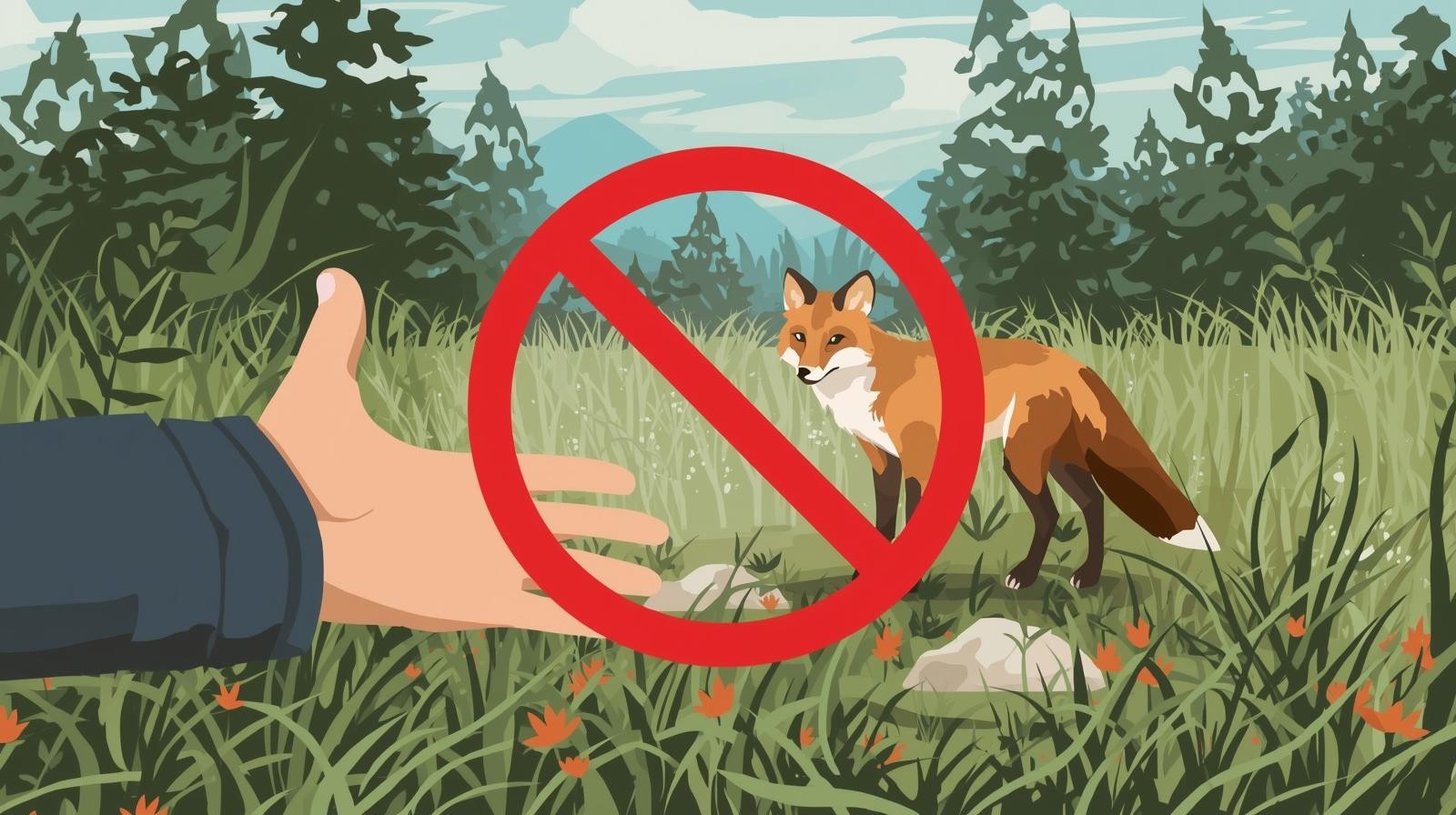
Why You Should Never Feed or Take Wild Animals Home
Hikers often share adorable videos of themselves feeding wild animals—a piece of bread, a slice of apple. The footage looks magical, the kind of content that melts hearts on social media.
And right now, you might be thinking, “Since when did this girl become such an expert?”
I have to admit—I used to do the same. 😄 I happily fed wild animals, took photos, and proudly told my friends about the good deed I had done.
But life is a great teacher. One day, I realized that my small act of kindness could actually become the greatest tragedy in that animal’s life. From that moment on, I started looking at these situations more consciously.
Wild Animals Must Find Their Own Food
When we unexpectedly encounter a fox, a deer, or even a young wolf on a trail, our first reaction is often compassion. We wonder: Why not give it a piece of bread? Why not get a little closer? Why not save it from this “dangerous” world?
In reality, however, that compassion can often lead to tragedy.
Sometimes, the best thing you can do for a wild animal is simply admire it from a distance.
Dependence on Humans = Death for the Animal
Wild animals are called wild for a reason. Their lives, instincts, and behaviors have evolved in freedom.
When we feed them, we change their natural behavior. They begin to lose their fear of people, approach villages and roads, seek food from humans, and sometimes even beg for it.
When people refuse to feed them or react unexpectedly, these animals may become aggressive. And aggression eventually becomes a danger both to humans and to the animals themselves.
Yes, sometimes even a small scratch can have life-changing consequences.
Dangerous Diseases
There is another serious risk when wild animals become accustomed to approaching people: disease transmission.
For example, a single bite from a fox can transmit rabies, a disease that can be fatal if not treated promptly. Even without a bite, contact with an animal’s saliva or fur may expose people to bacterial infections or parasites.
What to Do If a Wild Animal Approaches or Bites You
- Do not try to feed, touch, or pet the animal, even if it appears friendly.
- Slowly and calmly move away without running or panicking. Sudden movements and loud noises can make wild animals more aggressive.
If you are bitten or scratched:
- Clean and disinfect the wound as soon as possible. A 3% hydrogen peroxide solution can be used for initial disinfection.
- Seek medical attention immediately.
- A rabies vaccination course may be necessary depending on the situation.
- Inform local wildlife, environmental, or veterinary authorities so they can properly assess and respond to any potential risk.
Remember: even the sweetest-looking fox carries all the power and unpredictability of the wild.
And when we learn to respect wild animals, we also learn to respect life itself. 🌿